



Echoes of Malice: Deciphering the Mechanical Animus of “Disney Villain”
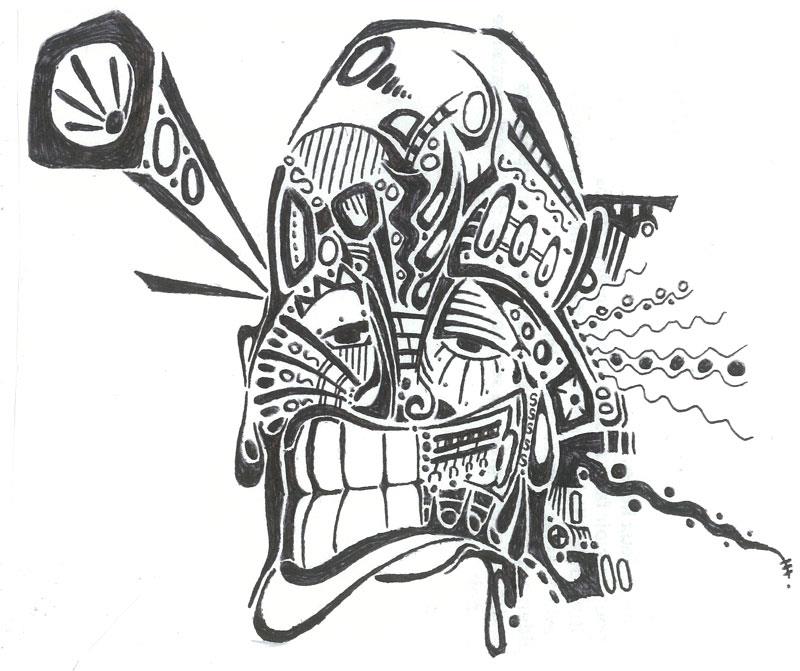
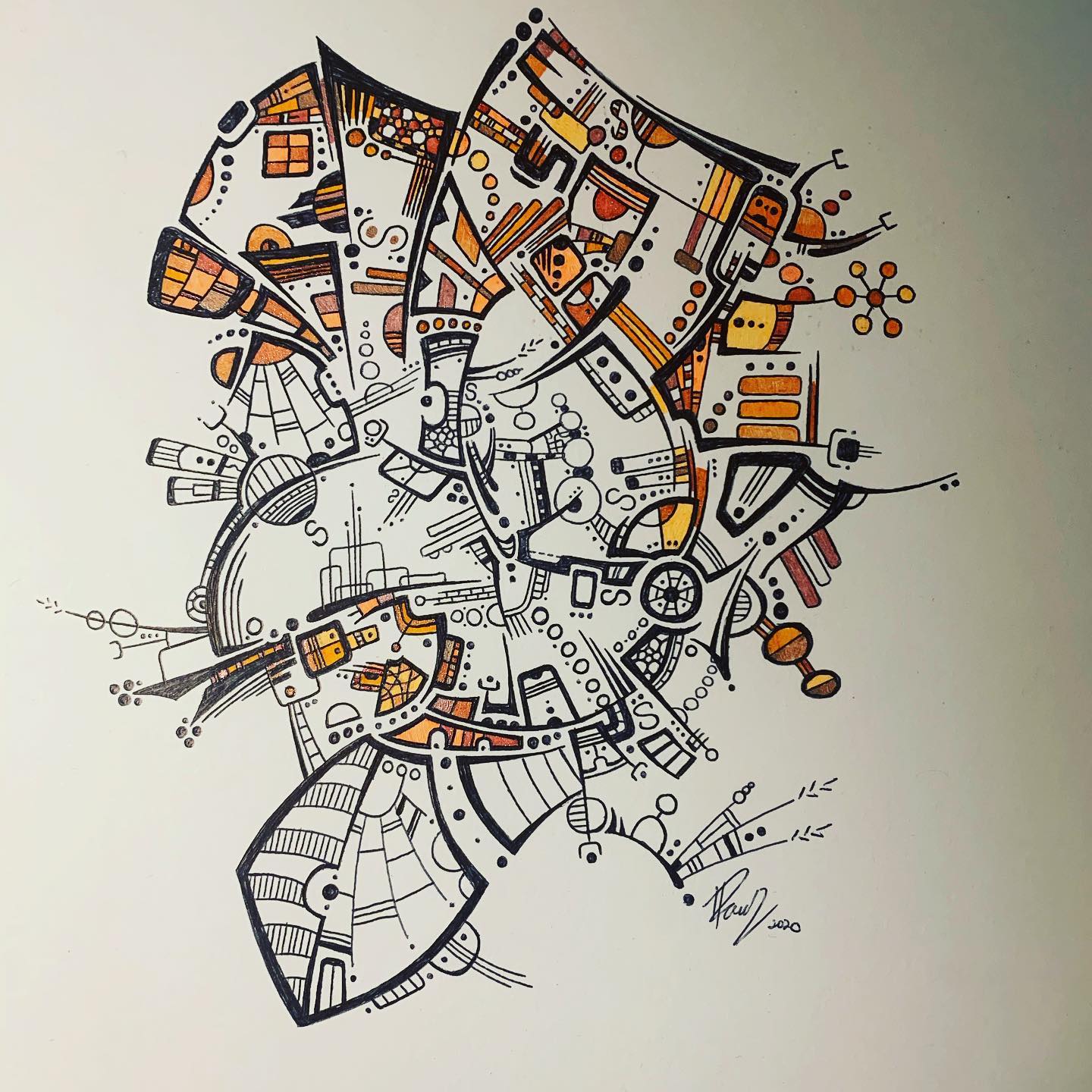
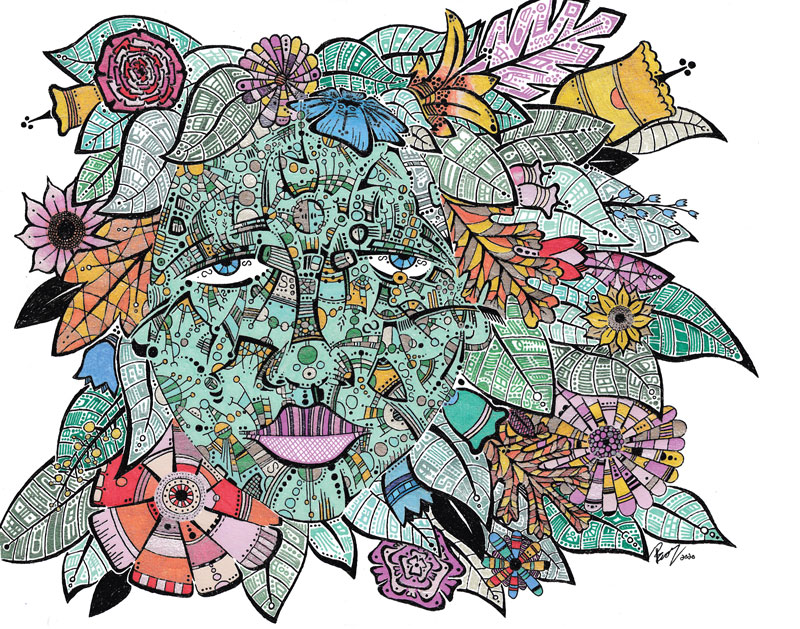
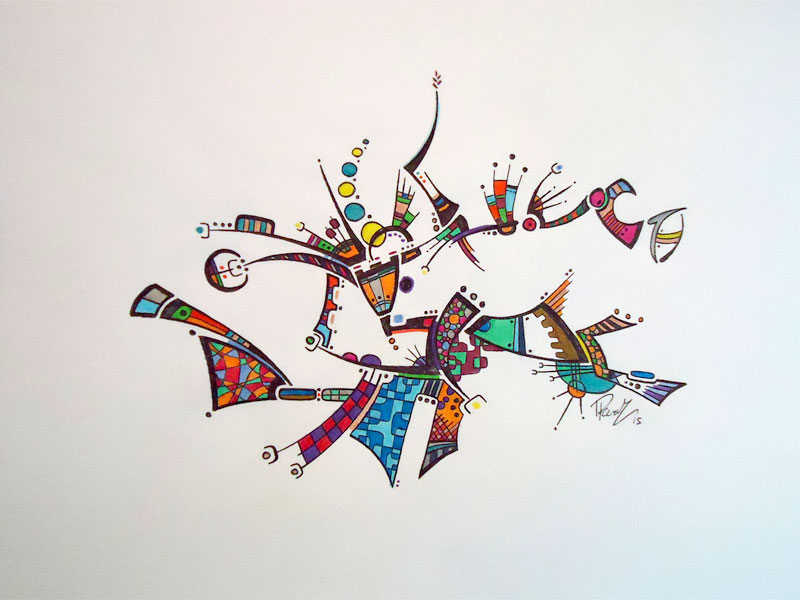
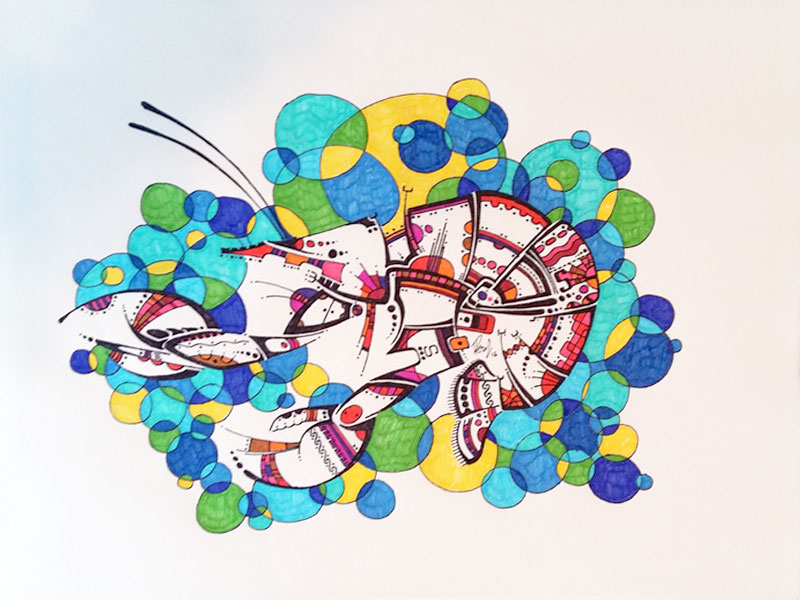
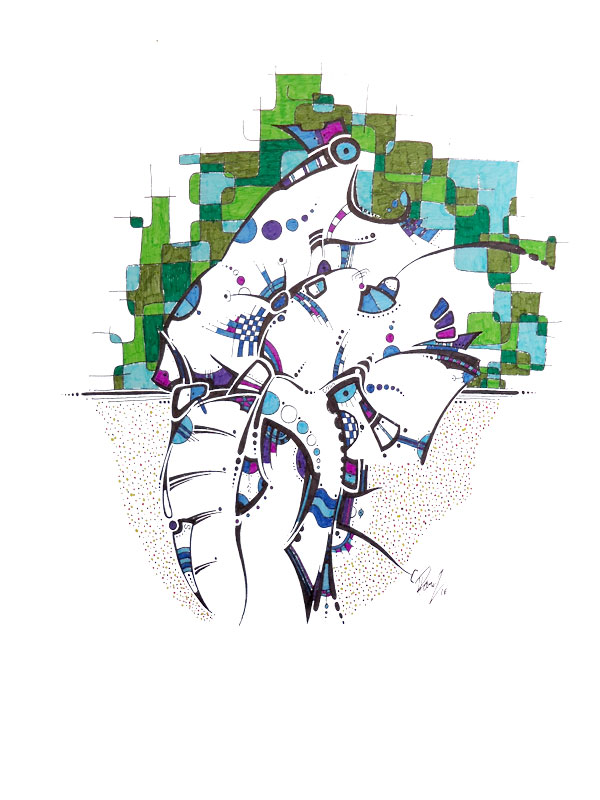
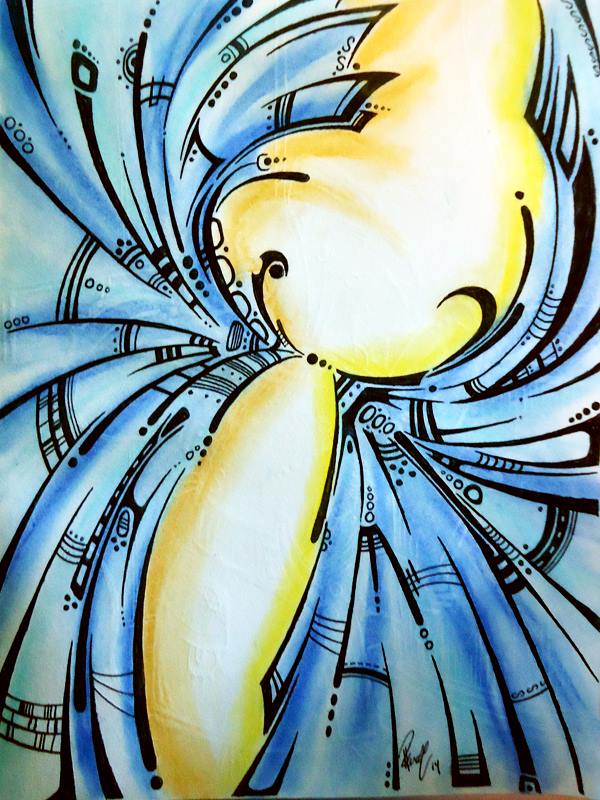
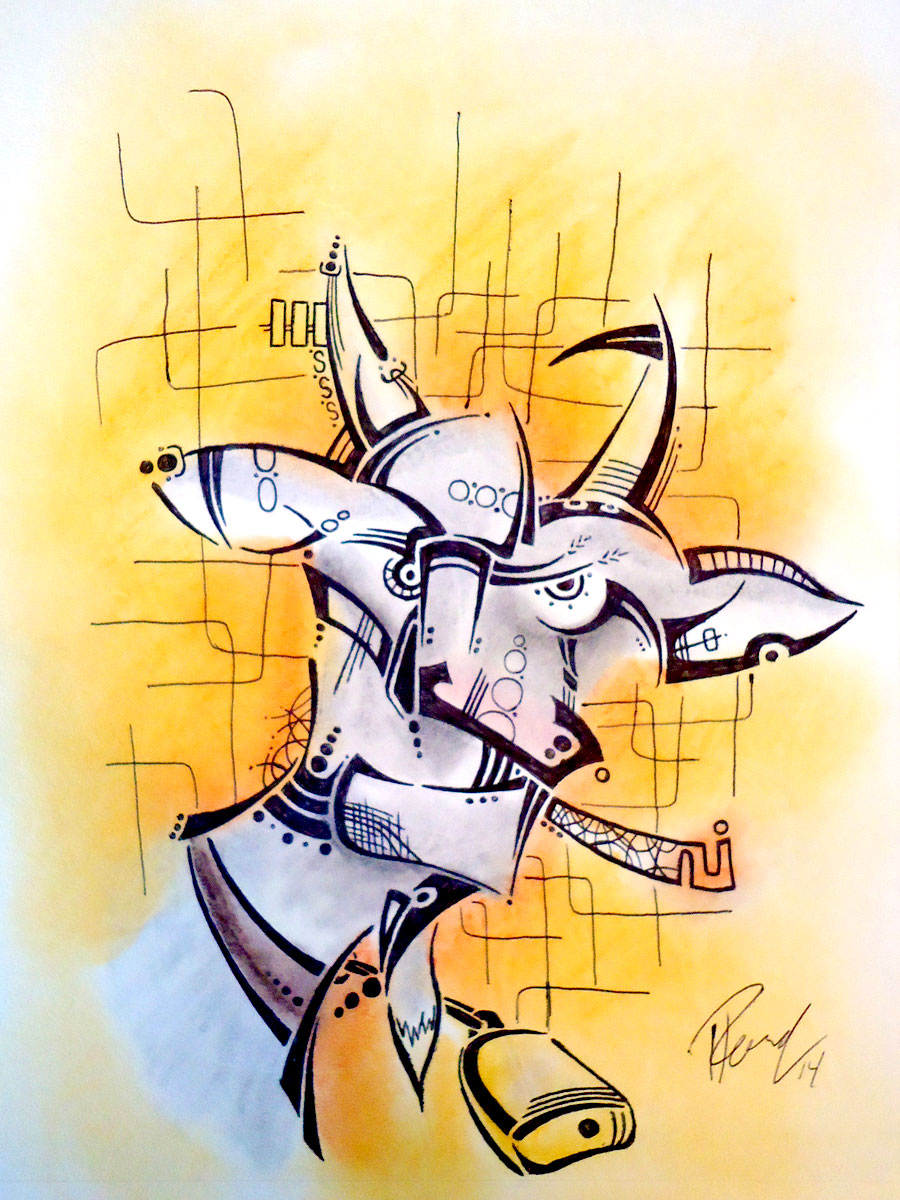
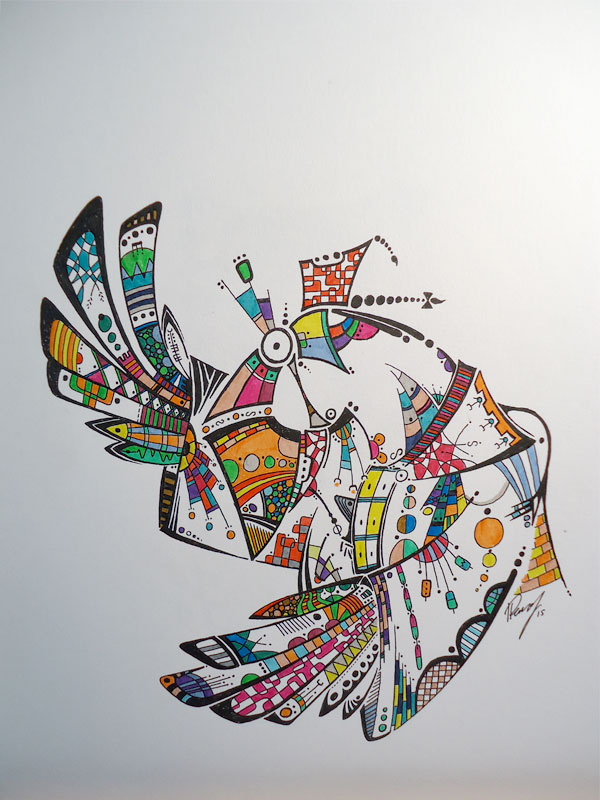
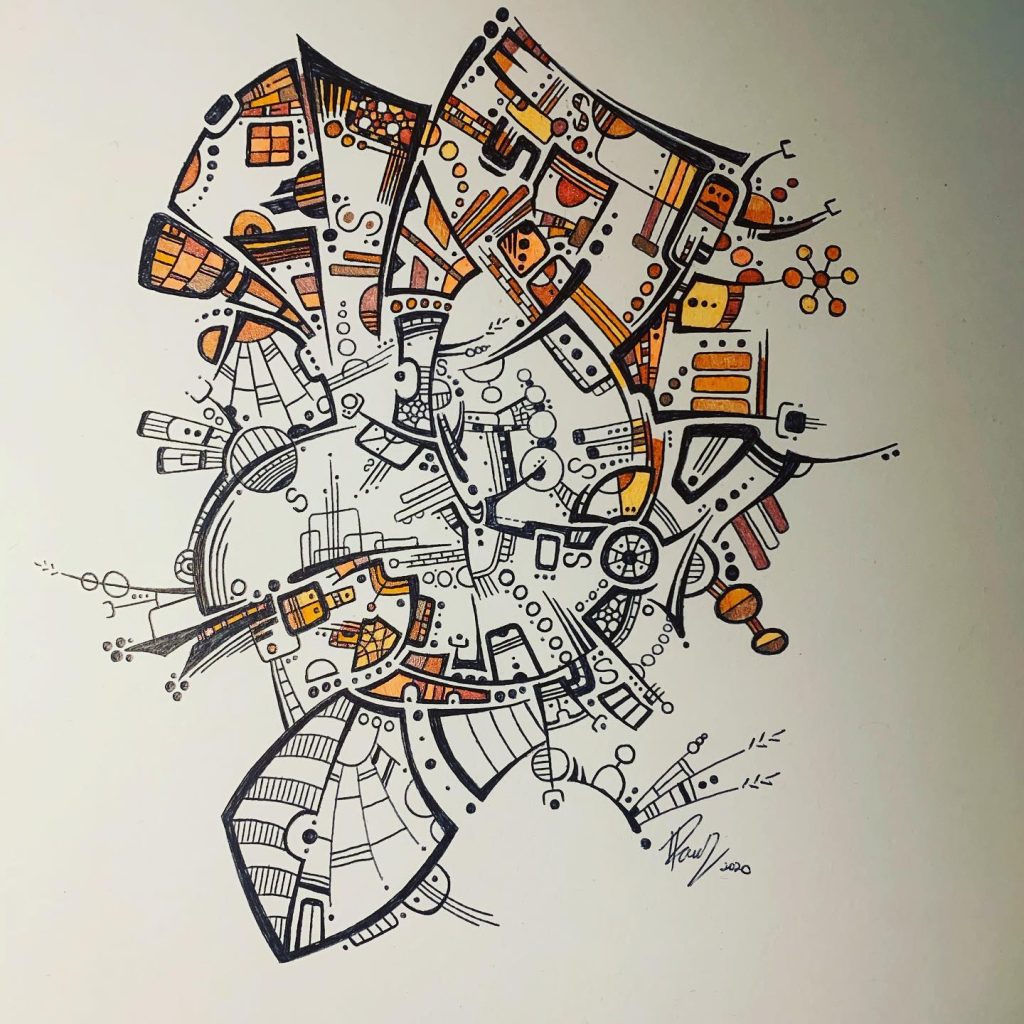
At first glance, Patrick’s 2020 ink-and-pen work, “Disney Villain,” presents a chaotic, sprawling ecosystem of geometric fragments and biomechanical linework. It immediately evokes the fractured architectural styles of Cubism mixed with the calculated precision of Steampunk illustration. Yet, as the viewer’s eye adjusts to the intricate maze of negative space and high-contrast ink, a more sinister, psychological narrative begins to take shape.
The piece functions less like a literal portrait and more like a schematic of corporate, calculated malice. By deconstructing the concept of the archetypal antagonist into an abstract collage, the artwork brilliantly captures the psychological anatomy of villainy: structured, segmented, and entirely devoid of soft edges.
The Geometry of Menace
The composition is anchored by a dense, swirling core that radiates outwards, mimicking a fragmented explosion or a complex clockwork mechanism. The linework is remarkably crisp, utilizing varying weights of black ink pen to establish depth and priority within the chaos.
The Sharpness of the Silhouette: Noticeably absent are organic, flowing forms. Instead, the piece is dominated by sharp angles, rigid grids, and heavy, sweeping black arcs that cut through the canvas. This stark geometry immediately signals discomfort and danger—classic visual shorthand for antagonist design, blown apart and reassembled.
The Steampunk Anatomy: Scattered throughout the abstraction are recognizable, almost industrial motifs: tiny ladders, gear-like wheels, structural scaffolding, and rows of rivets or dots. It feels less like a living creature and more like a factory of bad intentions, implying that the “Disney Villain” is a product of deliberate, mechanical design.
A Palette of Calculated Warning
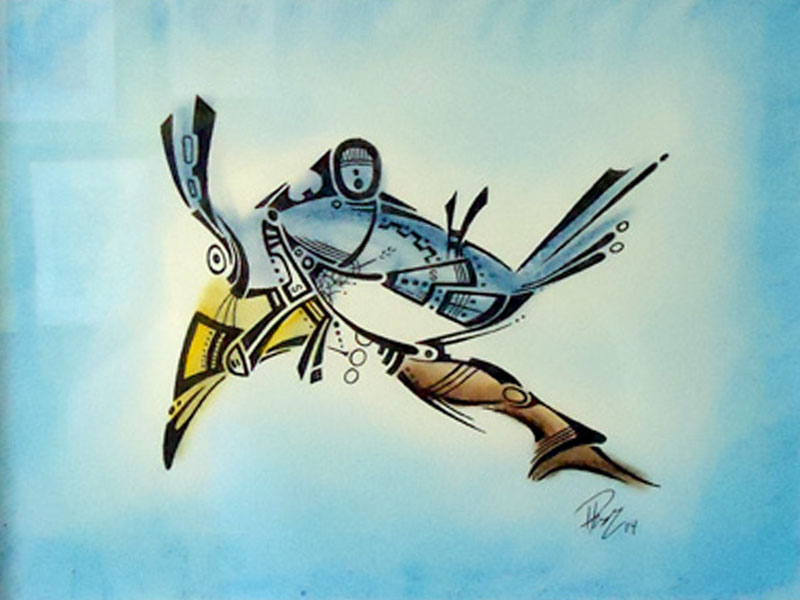
The color choices in the piece are deceptively restrained but highly effective. By limiting the palette to black ink and shades of amber, rust, and mustard yellow, the artist avoids the typical neon purples and sickly greens often associated with animated villainy. Instead, the color story roots itself in something more industrial and hazardous.
Element
Visual Impact
Psychological Subtext
Heavy Black Ink
Imposes structural weight, deep shadows, and stark boundaries.
Represents absolute control, darkness, and the unyielding nature of the antagonist.
Amber & Rust Tones
Adds a localized warmth that feels scorching rather than comforting.
Evokes the warning signs of nature (wasps, fire) or the decay of oxidized metal.
Negative Canvas Space
Allows the complex structure to breathe, preventing total sensory overload.
Suggests a void or a vacuum, as if the villainous structure is consuming the emptiness around it.
Hidden Motifs and Abstract Lore
What elevates “Disney Villain” from a beautiful technical exercise into a compelling piece of character critique are the subtle, playful nods hidden within the abstraction. The artist has peppered the composition with cryptic symbols that invite the viewer to hunt for meaning.
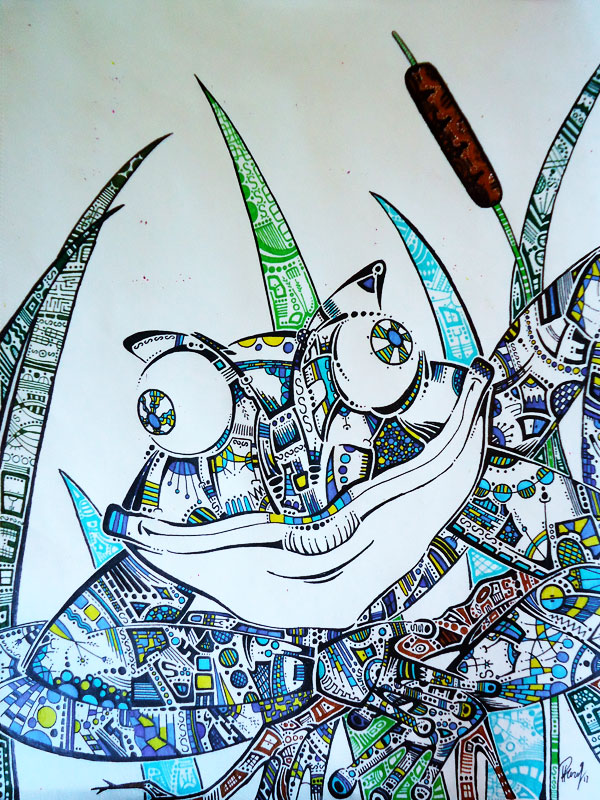
Letterforms like “S” curves slice through the mechanical parts—perhaps a subtle nod to a snake-like Jafar, the slicked-back aesthetic of Scar, or the literal slither of deception. In the top-left quadrant, a grid-like window pane stands out amidst the chaos, hinting at a lonely tower or a forgotten castle room where plots are hatched in the dark. In the bottom-right corner, fine, antenna-like lines spark outward, suggesting a broadcasting of malevolent intent or a mechanical weapon ready to fire.
The signature at the bottom, accompanied by the year 2020, sits neatly beneath a dangling, anchor-like weight, grounding the piece perfectly.
Final Verdict
“Disney Villain” is a triumph of intricate ink-work that trades cheap nostalgia for sophisticated abstraction. Instead of drawing a face we already know, Patrick has drawn the feeling of a threat. It is a visual representation of a calculated plot—a cold, beautiful, and mesmerizing machine of malice that demands a closer look.