








Medium: Black and White Ink / Digital Line Art
Visual Architecture and Technique
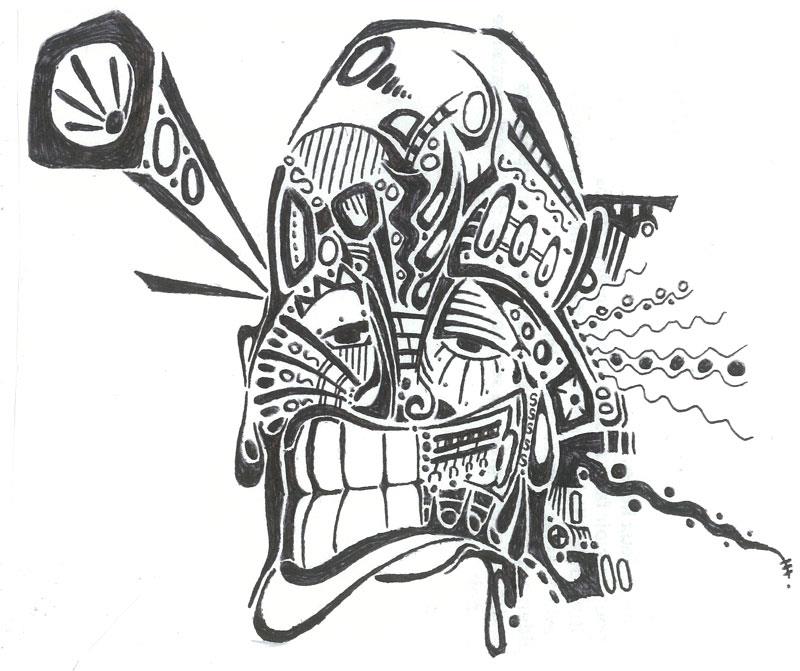
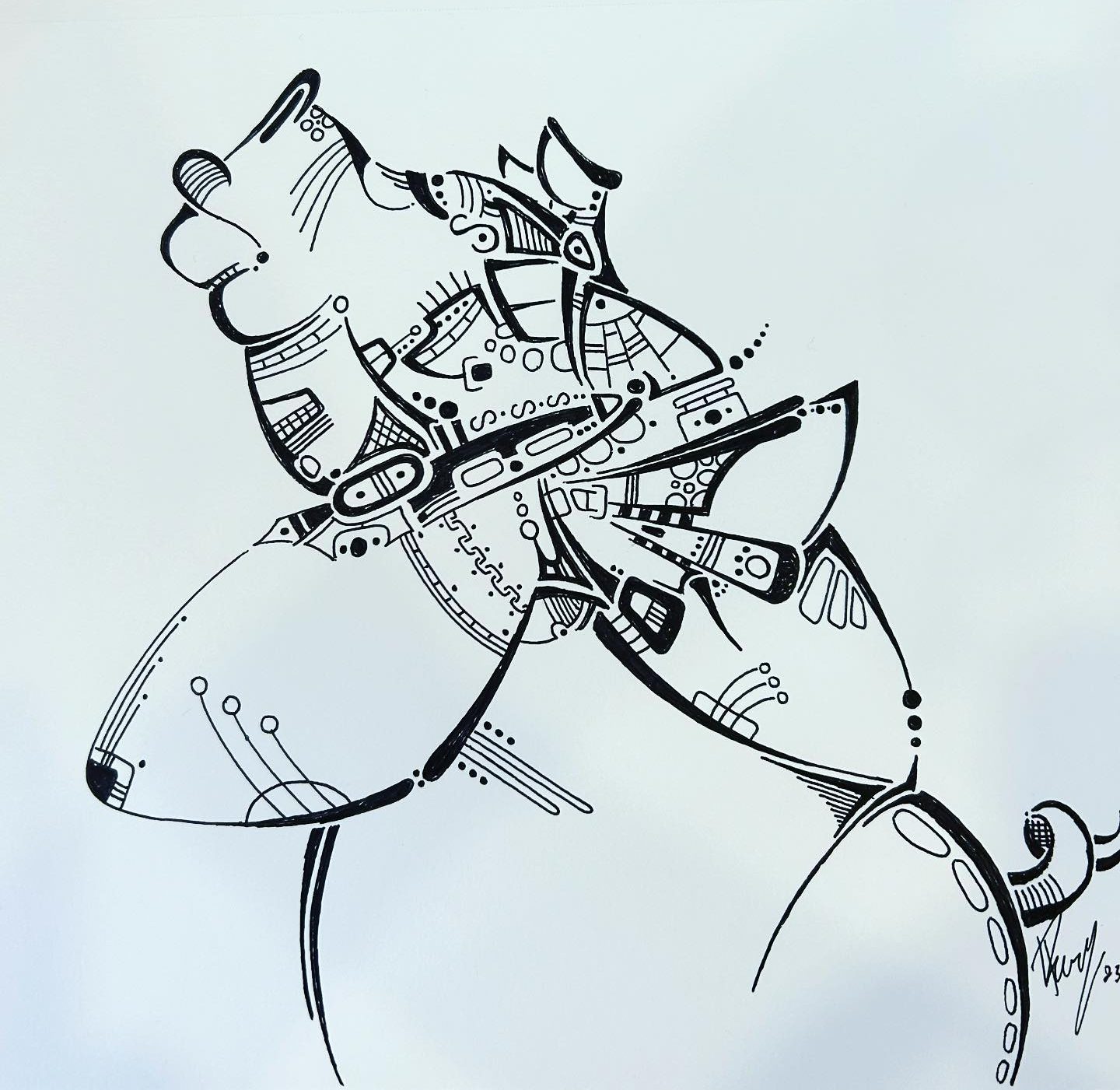
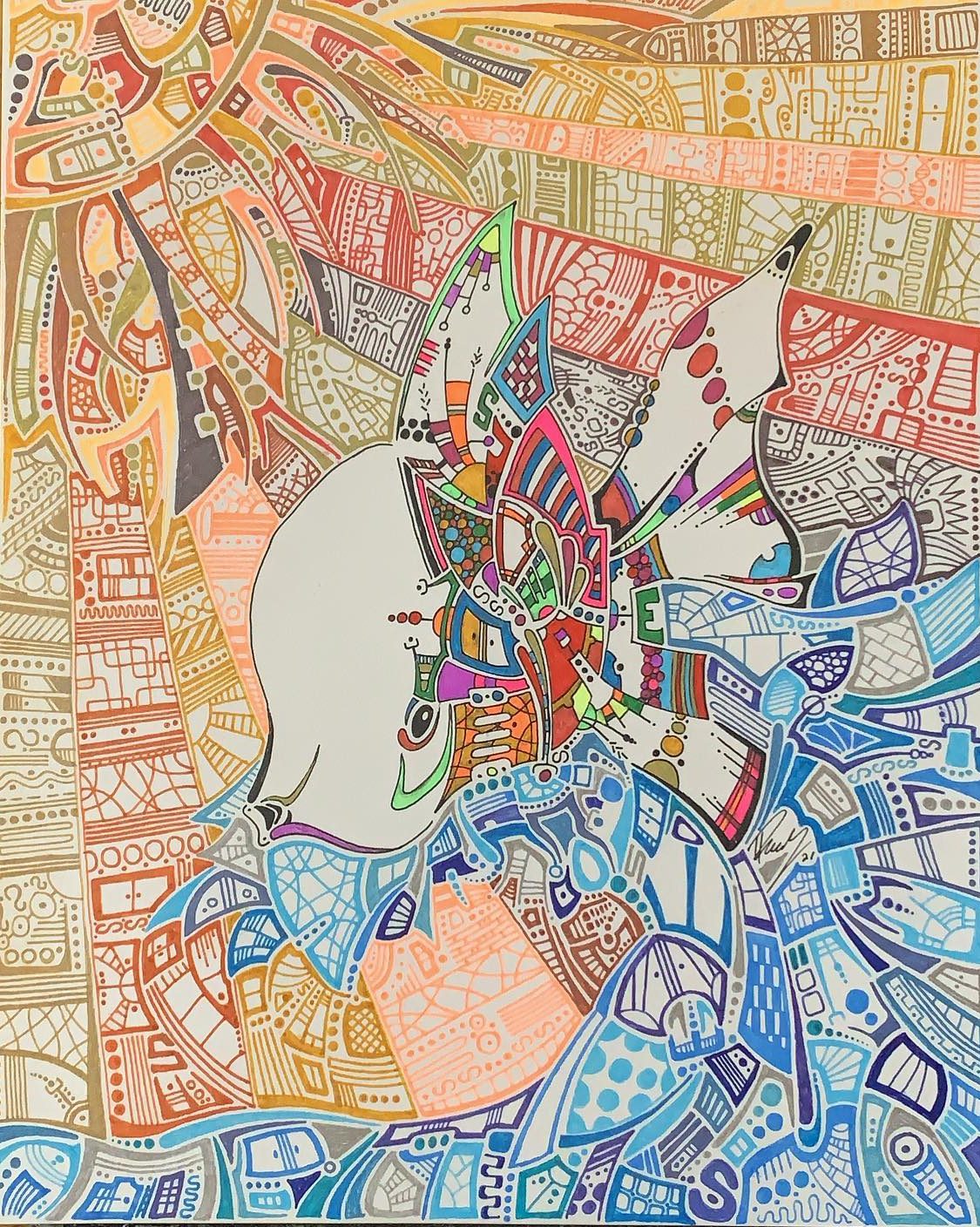
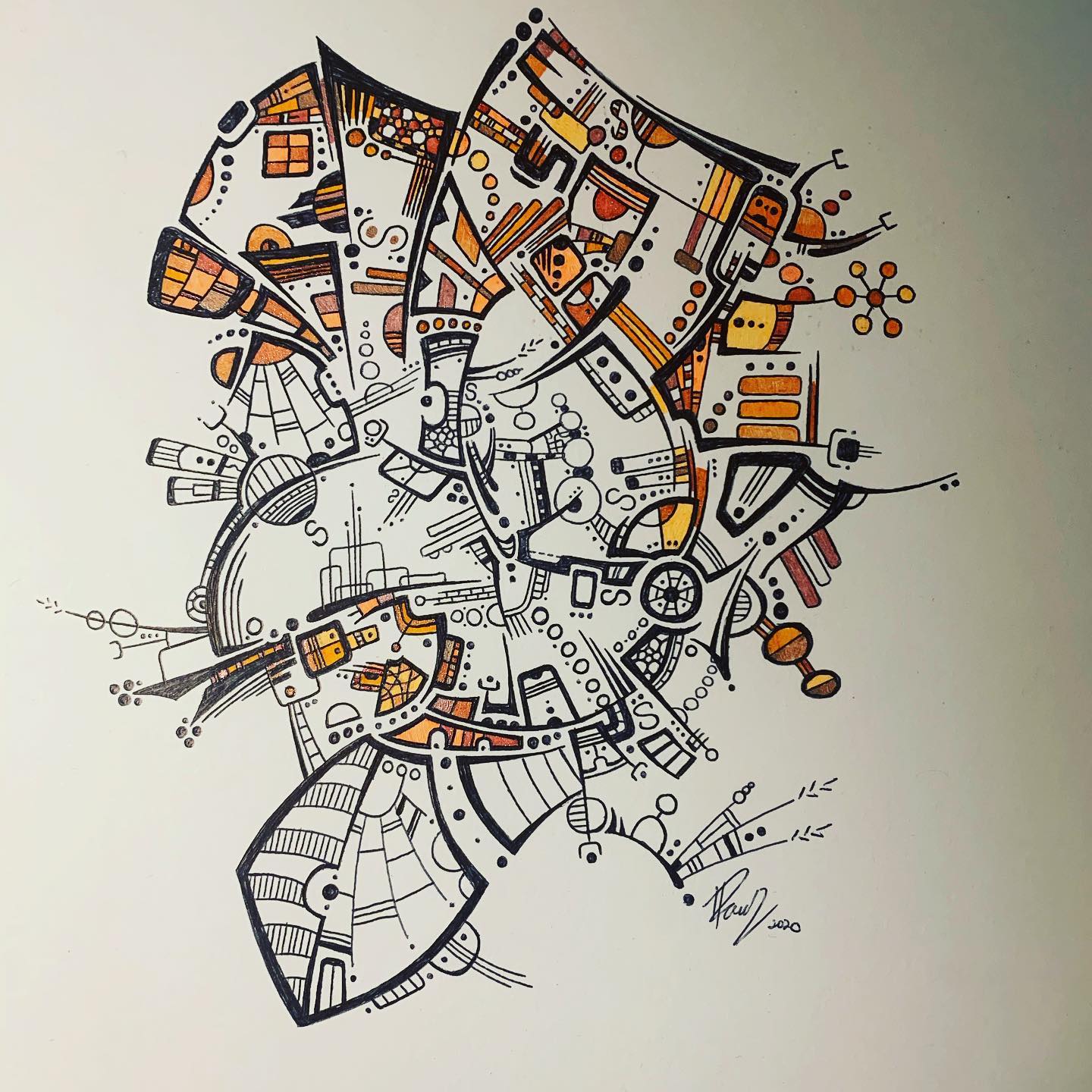
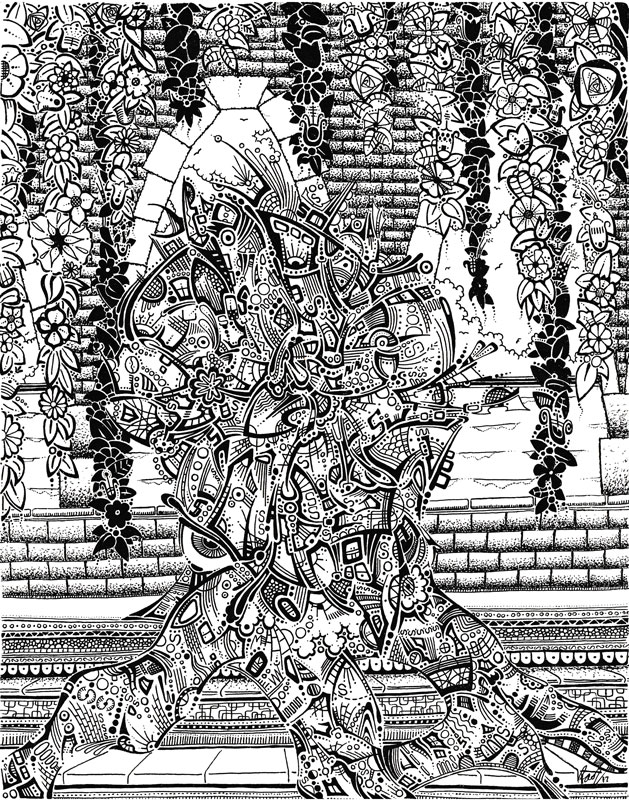
At first glance, “Cthulhu” presents itself as a masterclass in horror vacui—the artistic compulsion to fill an entire surface with detail. The artist utilizes a meticulous, high-contrast ink technique that feels both deeply traditional (reminiscent of classic woodcuts and dense comic book cross-hatching) and intensely modern in its geometric, doodle-like precision.
The tonal contrast is exceptionally well-managed. By anchoring the background with a stippled brick wall and structured floral garlands, the artist creates a stark, geometric frame. This calculated order makes the central chaos of the figure explode off the page. The sheer variety of textures—ranging from fine stippling and parallel line shading to bold, solid blacks—prevents the dense composition from collapsing into visual noise.
Formal Breakdown and Composition
The piece is brilliantly deceptive in its composition. It utilizes a classic architectural backdrop—complete with a stone archway and structured ledge—to establish a sense of grounded reality.
However, the entity occupying the foreground utterly shatters that reality.
The Silhouette: The central figure possesses a dynamic, forward-striding posture. The sweeping lines at the base mimic powerful legs or writhing appendages capturing a sense of monumental momentum.
The Micro-Narrative: Within the silhouette of the entity, the eye is forced to slow down. The form is a biological impossibility, constructed from an intricate mosaic of hidden symbols, mechanical gears, organic eyes, floral motifs, and abstract typography. It is an brilliant visual metaphor for the cosmic entity it represents: a being composed of fractured realities and incomprehensible geometries.
Thematic Interpretation: Redefining Cosmic Horror
Naming this piece “Cthulhu” invites an immediate dialogue with Lovecraftian lore, but the artist subverts traditional expectations. Instead of the typical, literal depiction of a tentacled, slimy behemoth rising from the deep, this interpretation tackles the core psychological terror of cosmic horror: the limits of human perception.
By rendering the entity out of dense, interlocking patterns, the artist perfectly captures the concept of a creature that the human mind cannot fully process all at once. The viewer experiences a micro-scale version of Lovecraftian madness; the longer you look, the more your brain tries to find order, only to be overwhelmed by a shifting kaleidoscope of disparate parts. The inclusion of the structured, peaceful background elements (the blooming vines, the neat brickwork) underscores this theme, contrasting the serene indifference of nature against the chaotic anomaly standing before it.
Final Impression
“Cthulhu” is a captivating, hypnotic achievement. It successfully marries the patience of fine illustrative craft with the chaotic energy of psychedelic surrealism. It is a piece that demands prolonged engagement, rewarding the viewer with new discoveries upon every viewing, and stands as a brilliant, abstract translation of psychological terror into pure graphic form.