




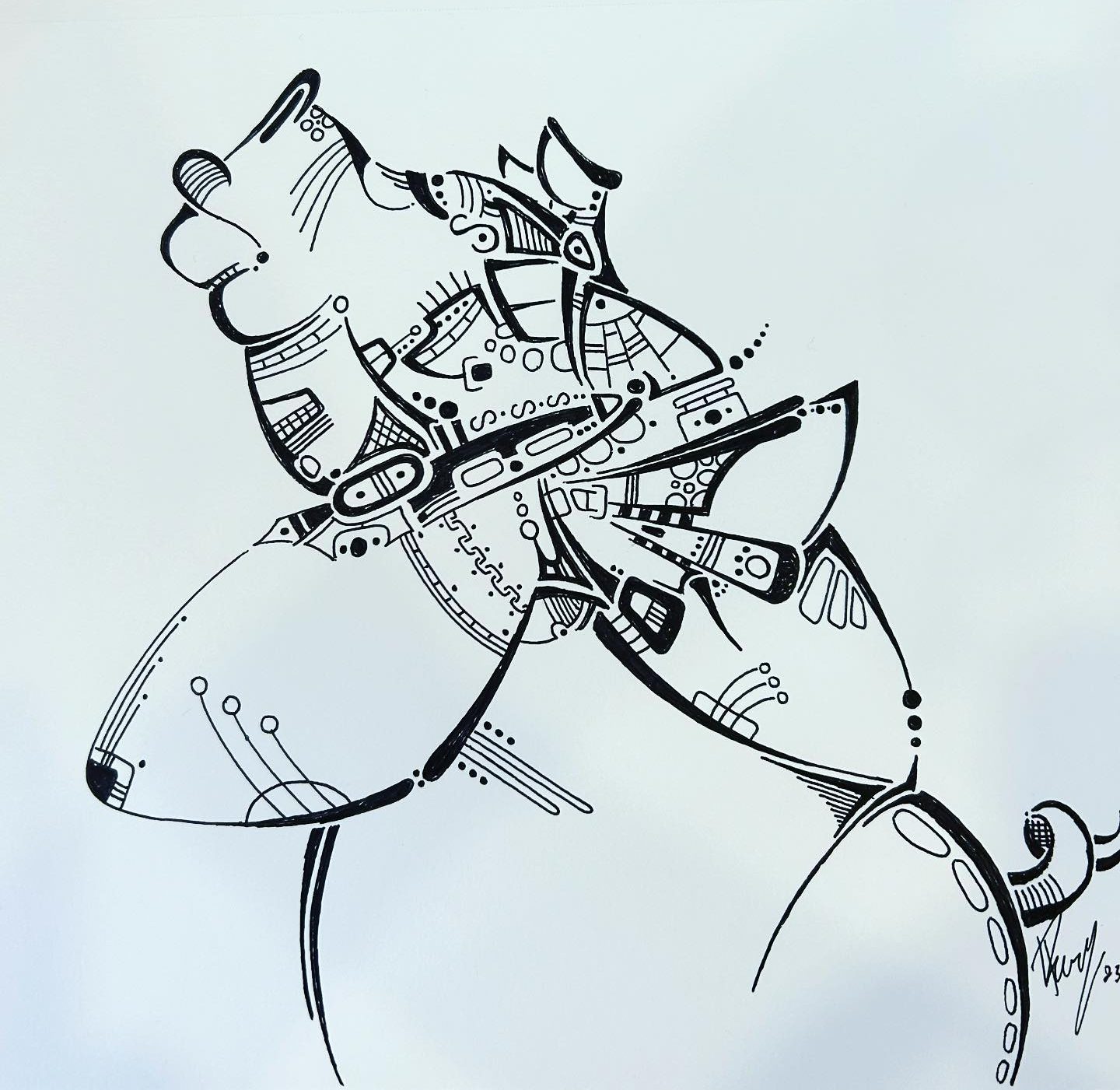
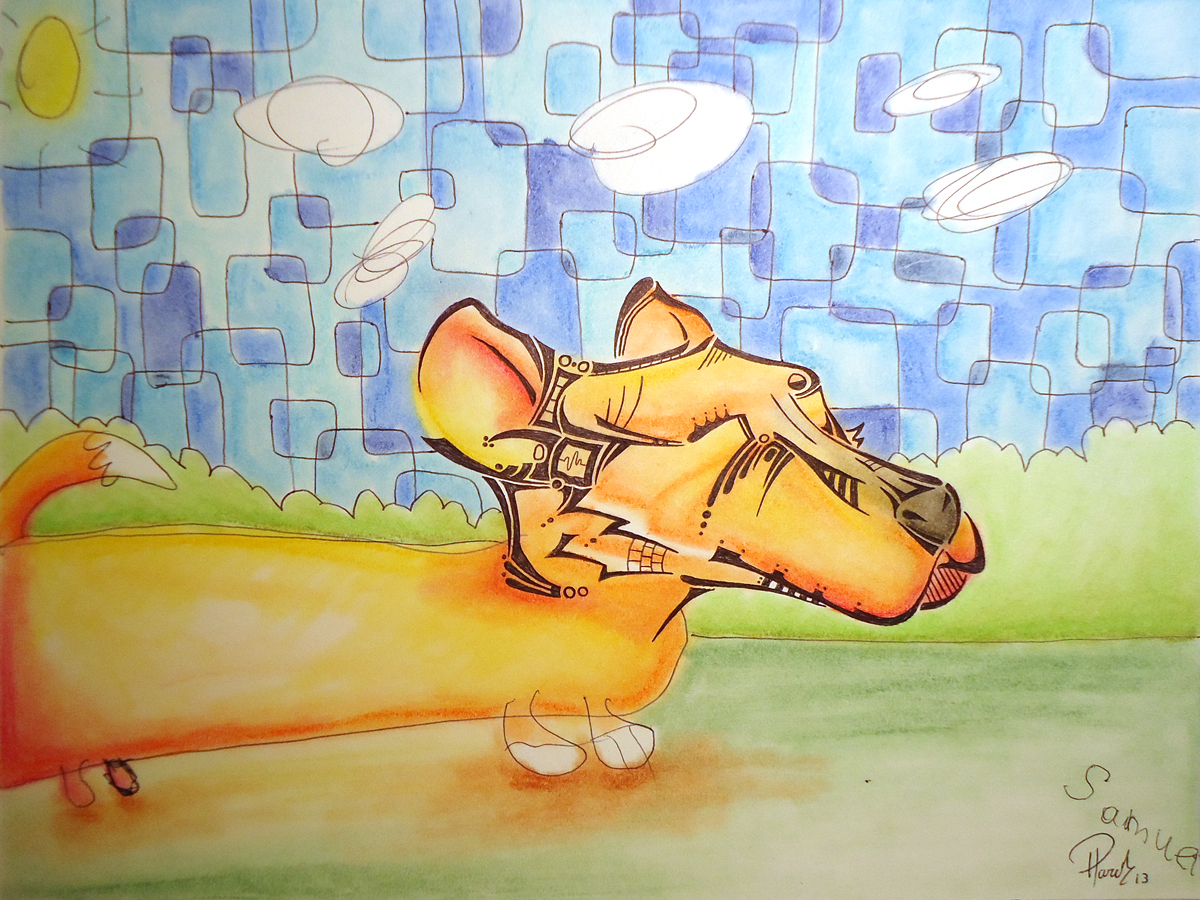
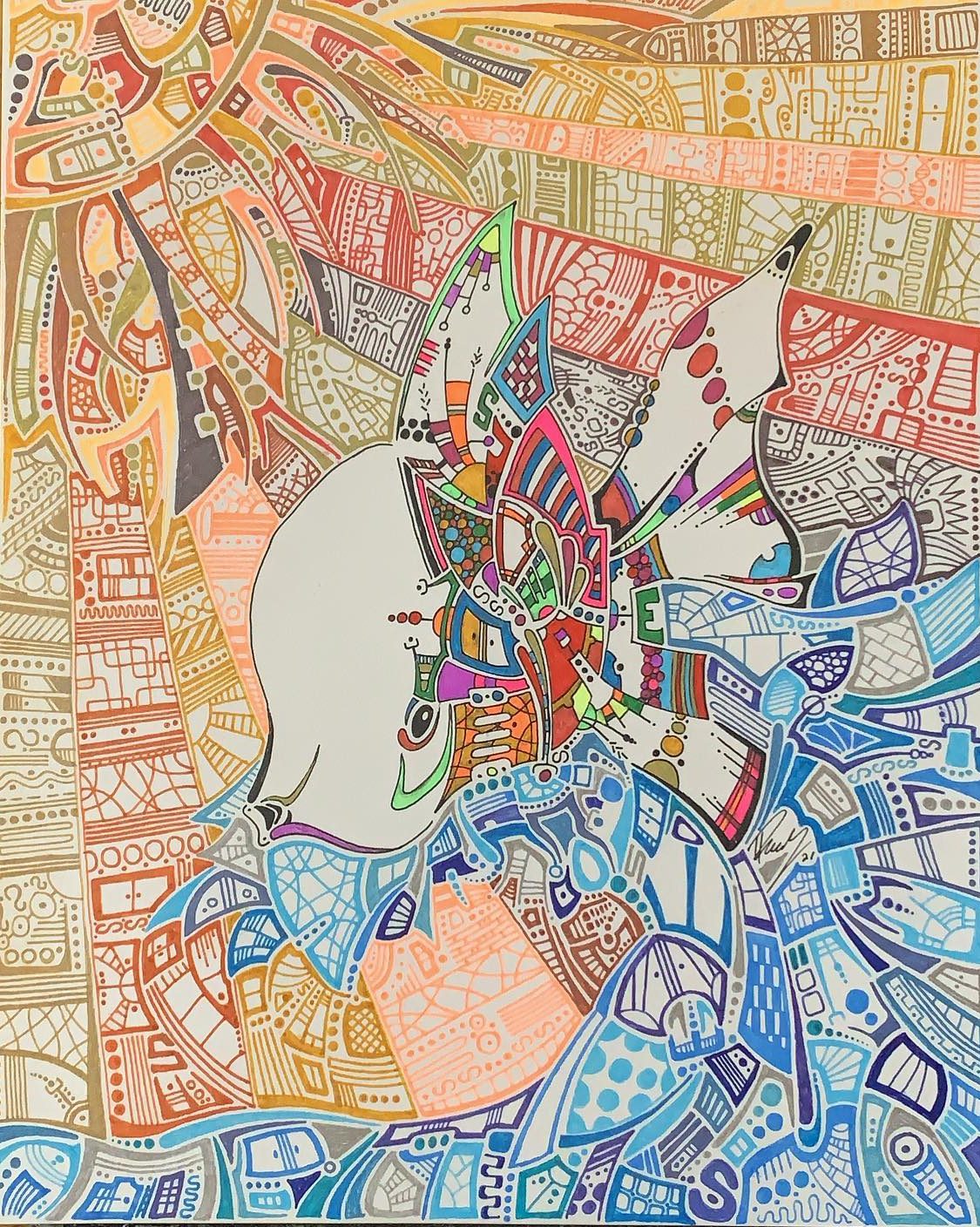
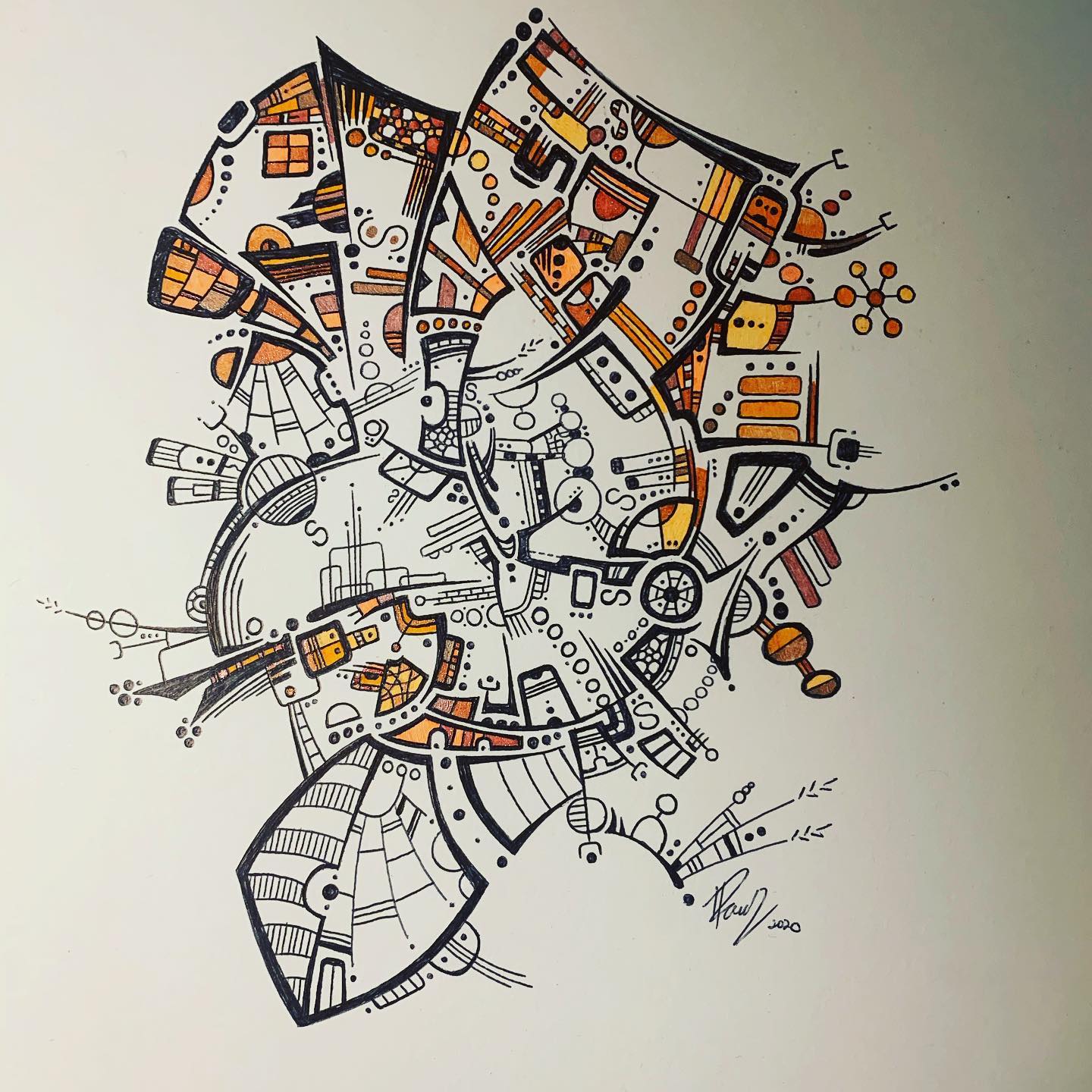



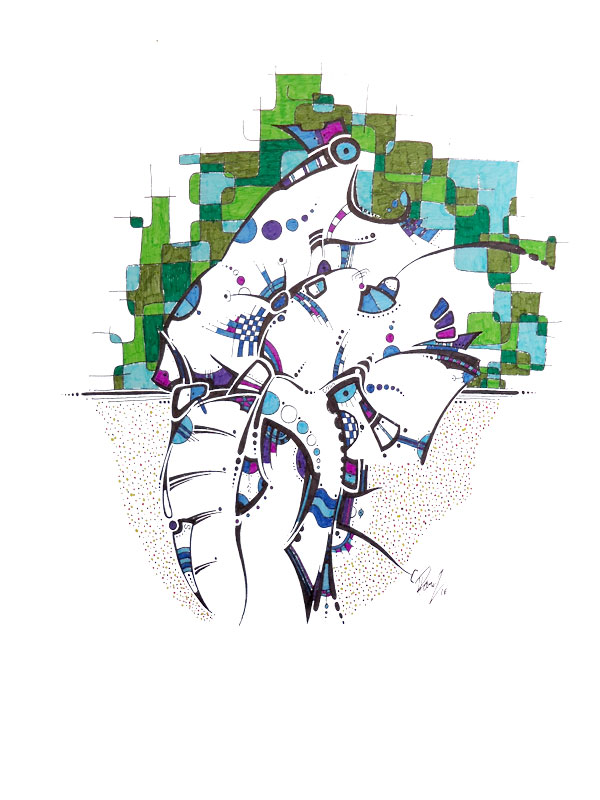
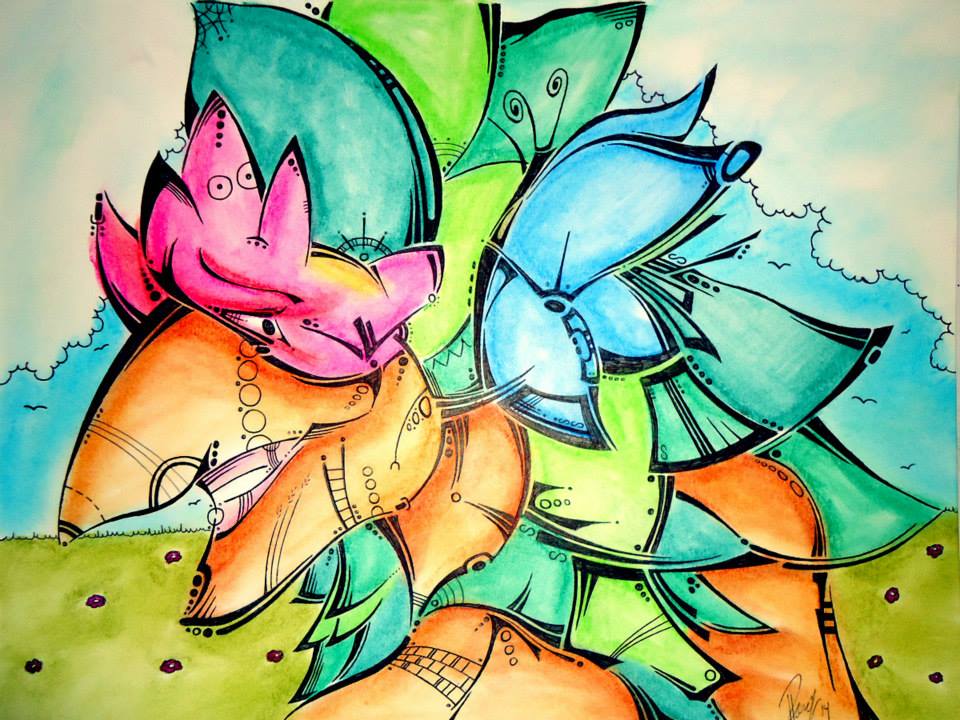
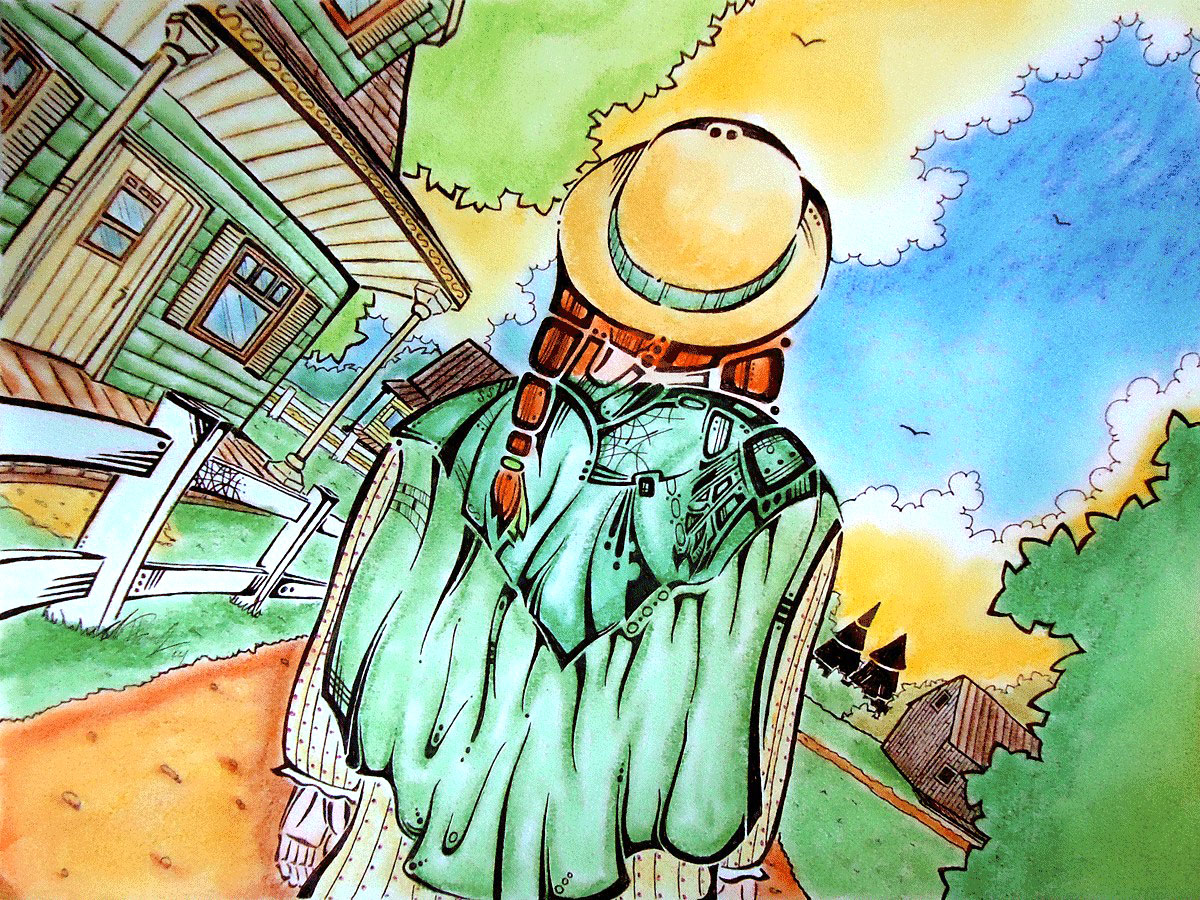
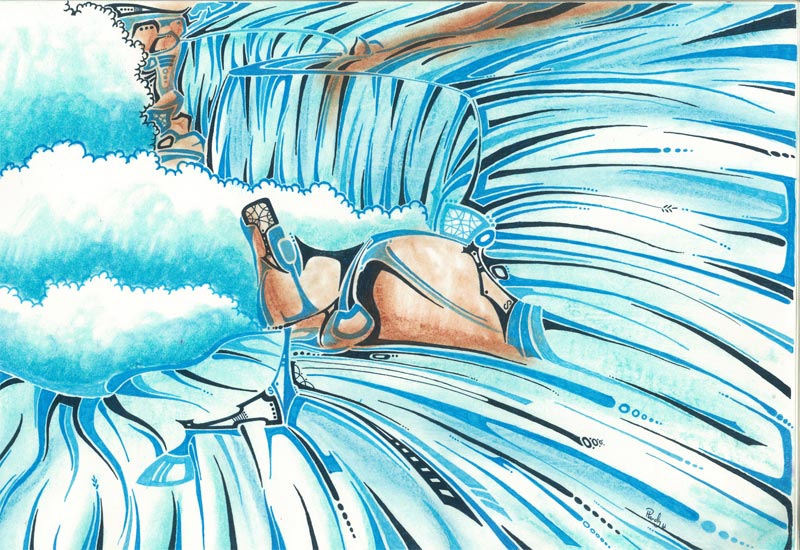
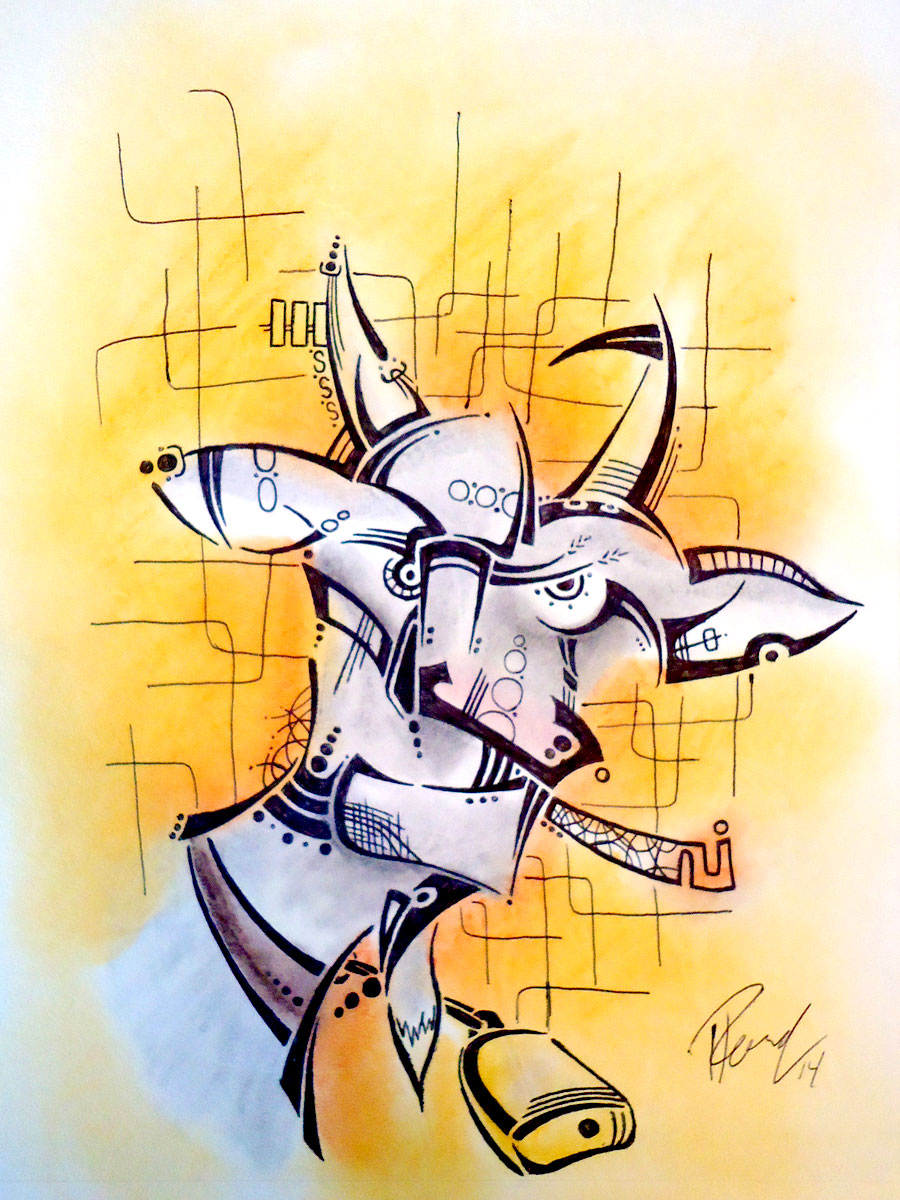
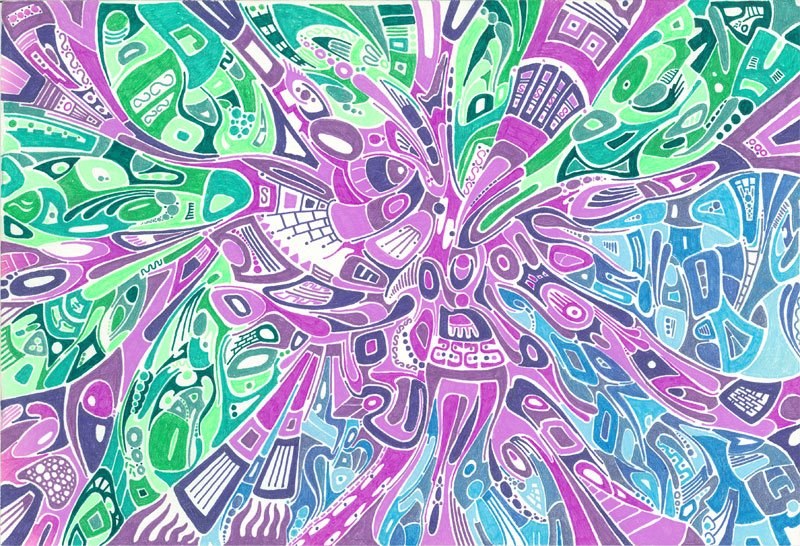
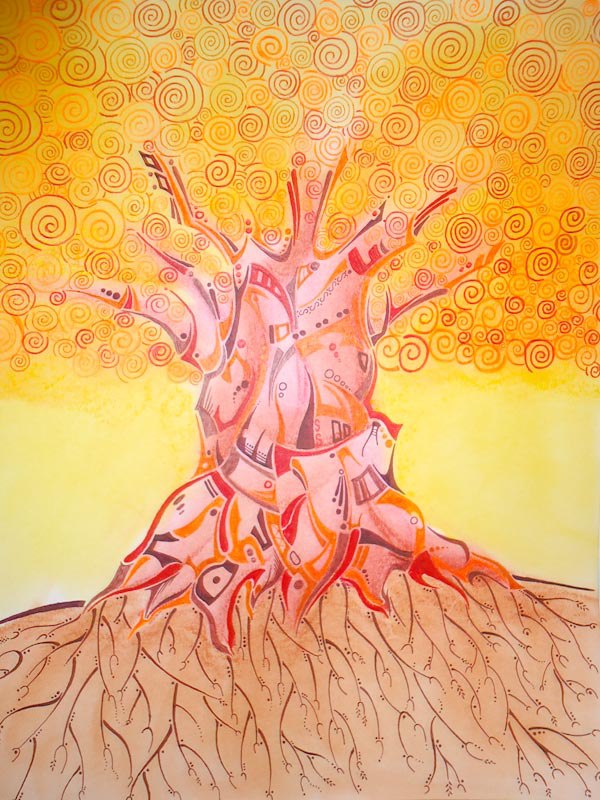
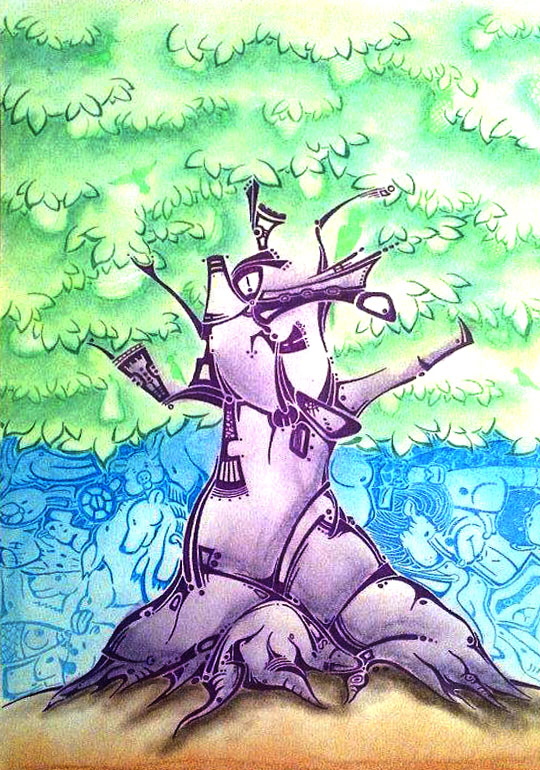
In Daniel 4, the ancient language of prophecy is reimagined through a distinctly contemporary visual sensibility—one that fuses organic symbolism with an almost mechanical anatomy. Executed in ink and soft pastels, the 11 × 17 inch work interprets Daniel’s dream of the great tree not as a distant biblical illustration, but as a living system suspended between nature, power, and inevitability.
The tree dominates the composition, its trunk rendered with a segmented, near-cyborg precision. Ink lines carve the form into articulated sections, evoking both bone and machinery, as if the tree itself were engineered rather than grown. This hybrid quality destabilizes the viewer’s expectations of the natural world and subtly reframes the dream as something constructed—an imposed order rather than a purely organic blessing. The softness of the pastel tones counters this rigidity, bathing the structure in muted violets and greens that lend the image a sense of vulnerability beneath its monumental presence.
Above, the canopy unfolds in luminous green layers, dense yet airy, suggesting abundance without excess. The leaves feel less like individual forms and more like a continuous atmosphere—an enveloping field of provision. Below, a band of cool blue encircles the base of the tree, populated with faintly suggested animals and figures. Their treatment is deliberately secondary: they are absorbed into pattern and flow rather than singled out as narrative elements. This visual decision reinforces the dream’s central hierarchy—the many sustained by the one, the collective dependent on a singular source.
The roots grip the ground with quiet insistence, anchoring the image in earth even as the trunk ascends beyond the frame’s comfort. There is no dramatic collapse depicted here, no axe poised to strike. Instead, the tension resides in restraint. The tree stands fully realized, fully authoritative, and therefore fully exposed to judgment. The absence of overt drama allows the viewer to linger in the uneasy stillness before reckoning.
What makes Daniel 4 resonate in a contemporary context is its refusal to moralize overtly. Rather than illustrating the biblical lesson directly, the work invites interpretation through form, texture, and balance. It becomes a meditation on systems of power—political, ecological, spiritual—and the fragility embedded within their apparent strength. The piece feels at once ancient and forward-looking, as though the prophecy has been reissued for a world increasingly aware of how abundance, when centralized, can become precarious.
In this way, Daniel 4 succeeds not as a literal retelling, but as a visual translation—one that honors the gravity of its source while speaking fluently in the language of contemporary drawing.