

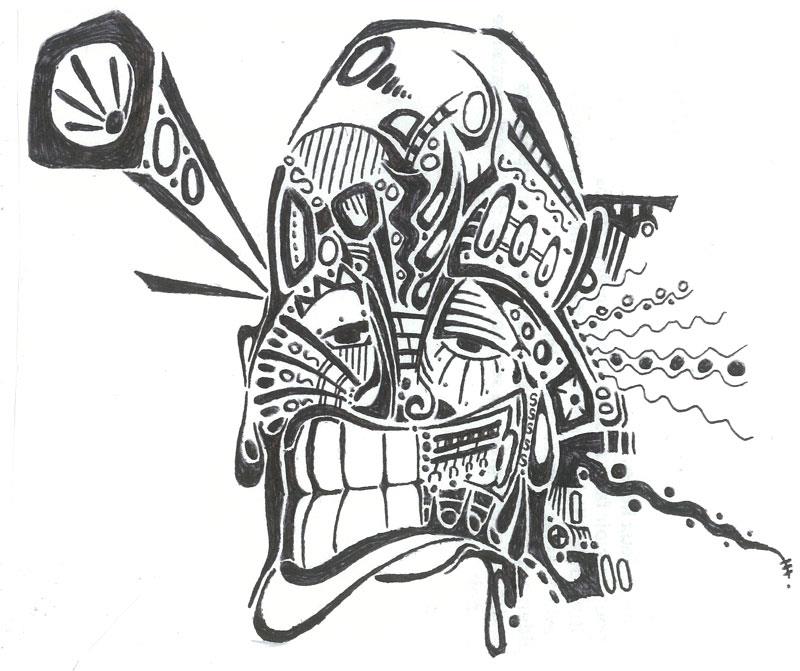
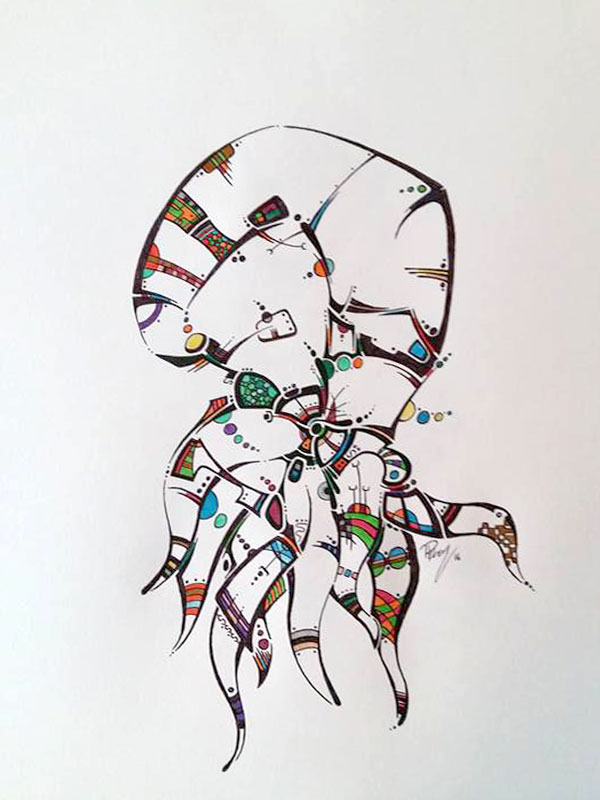
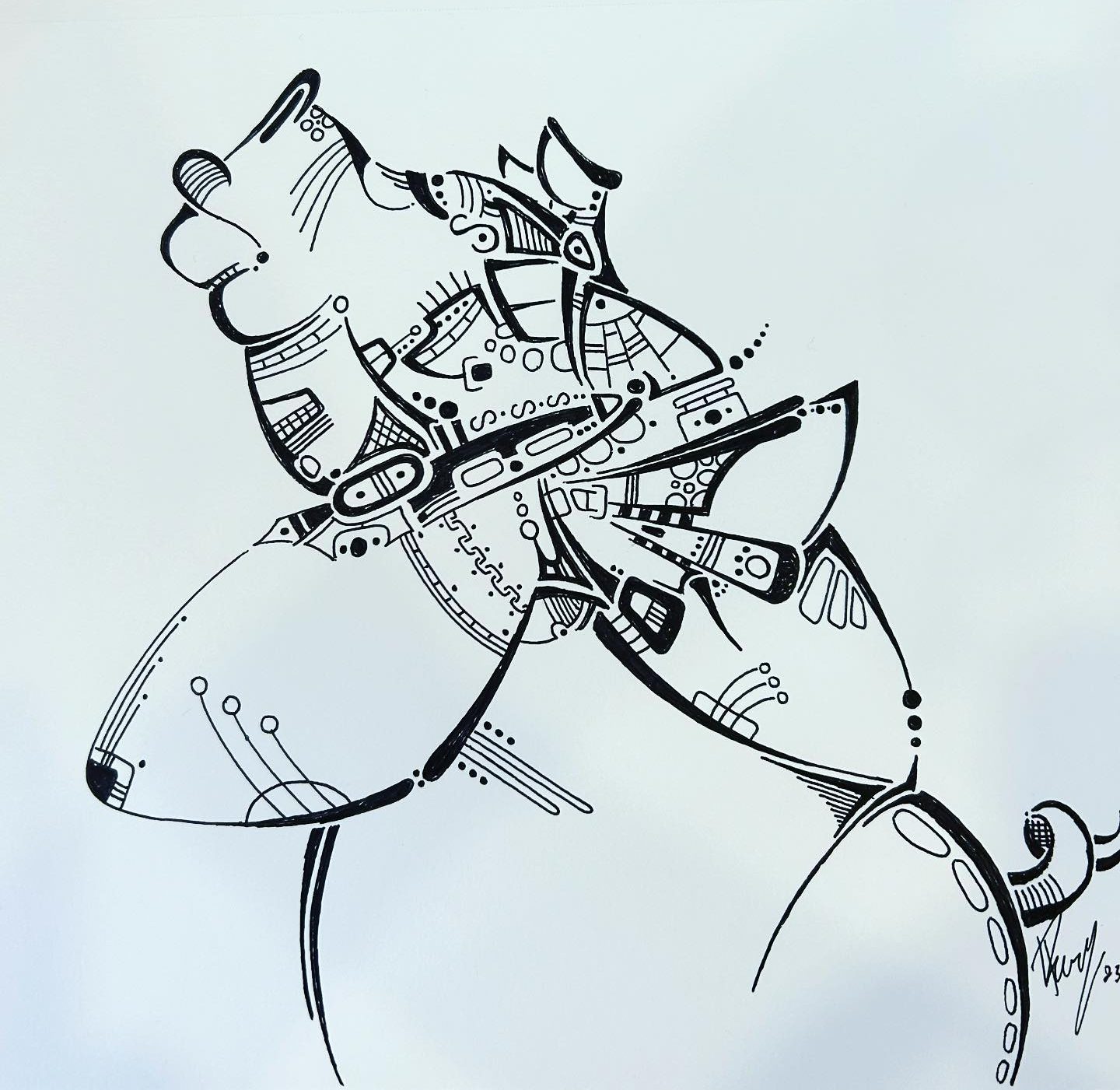



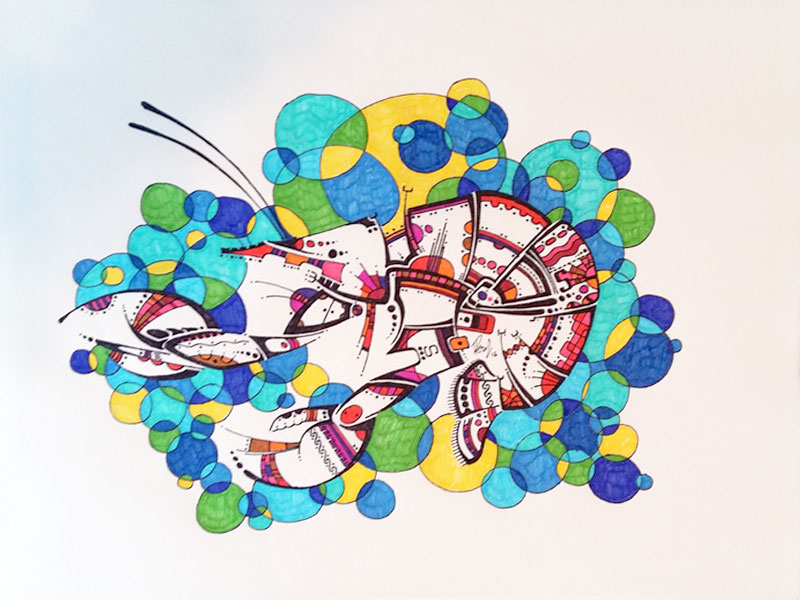
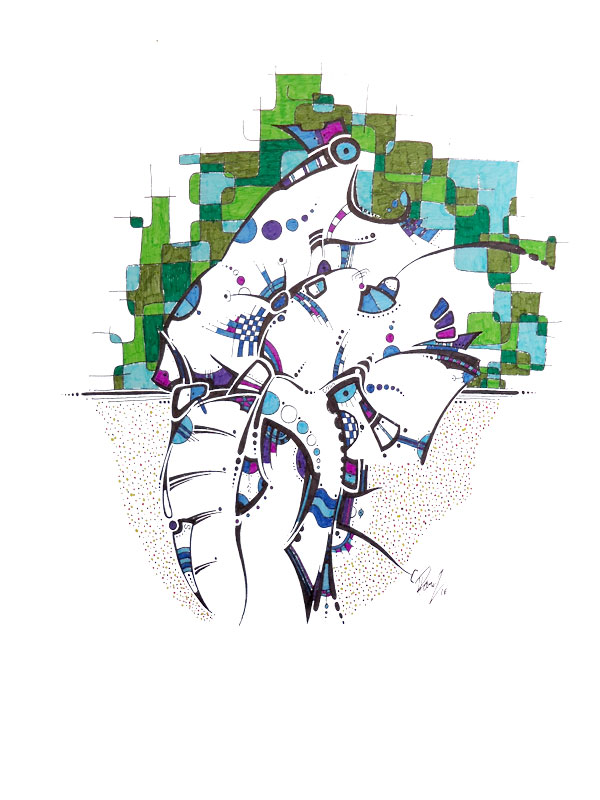
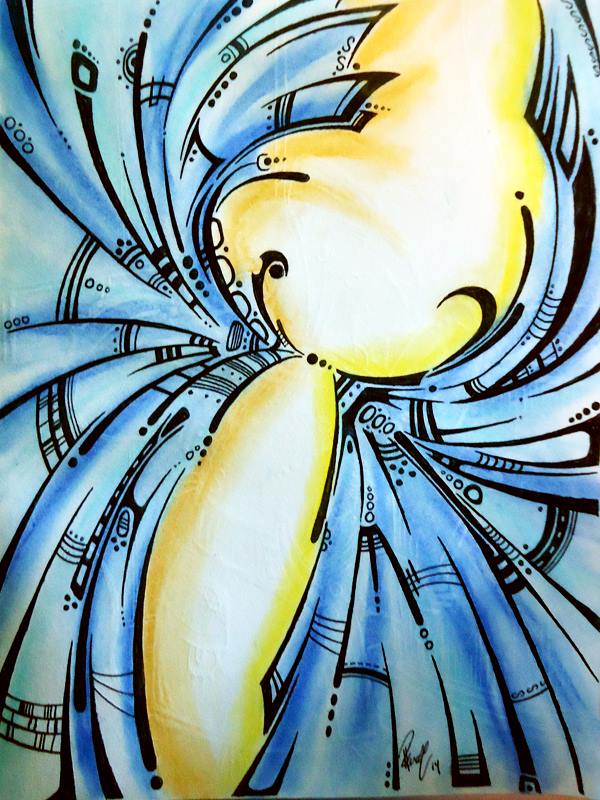
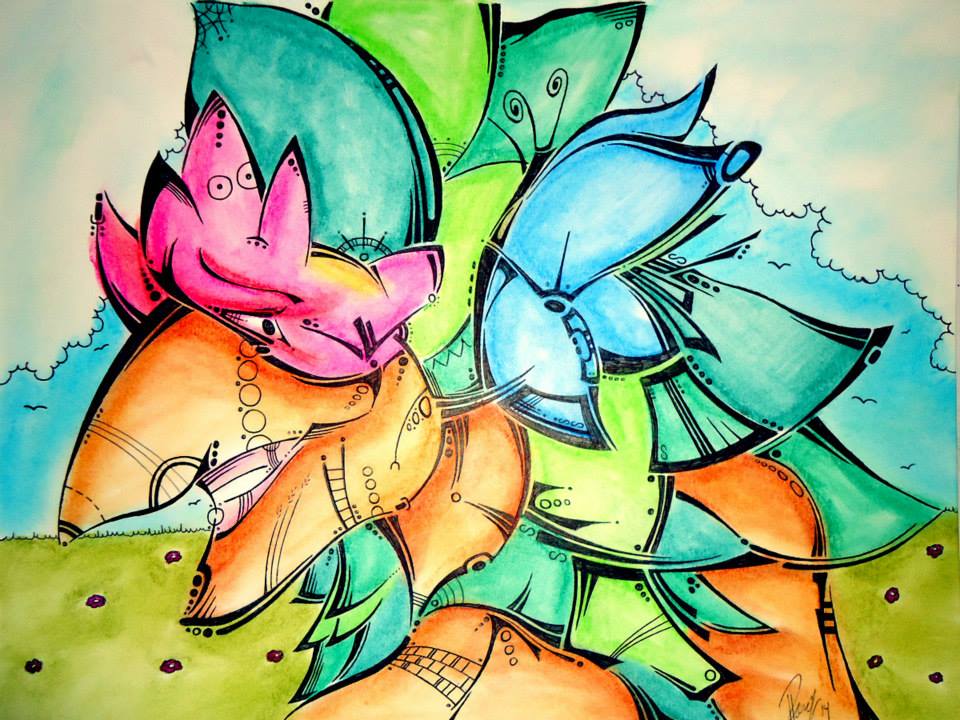
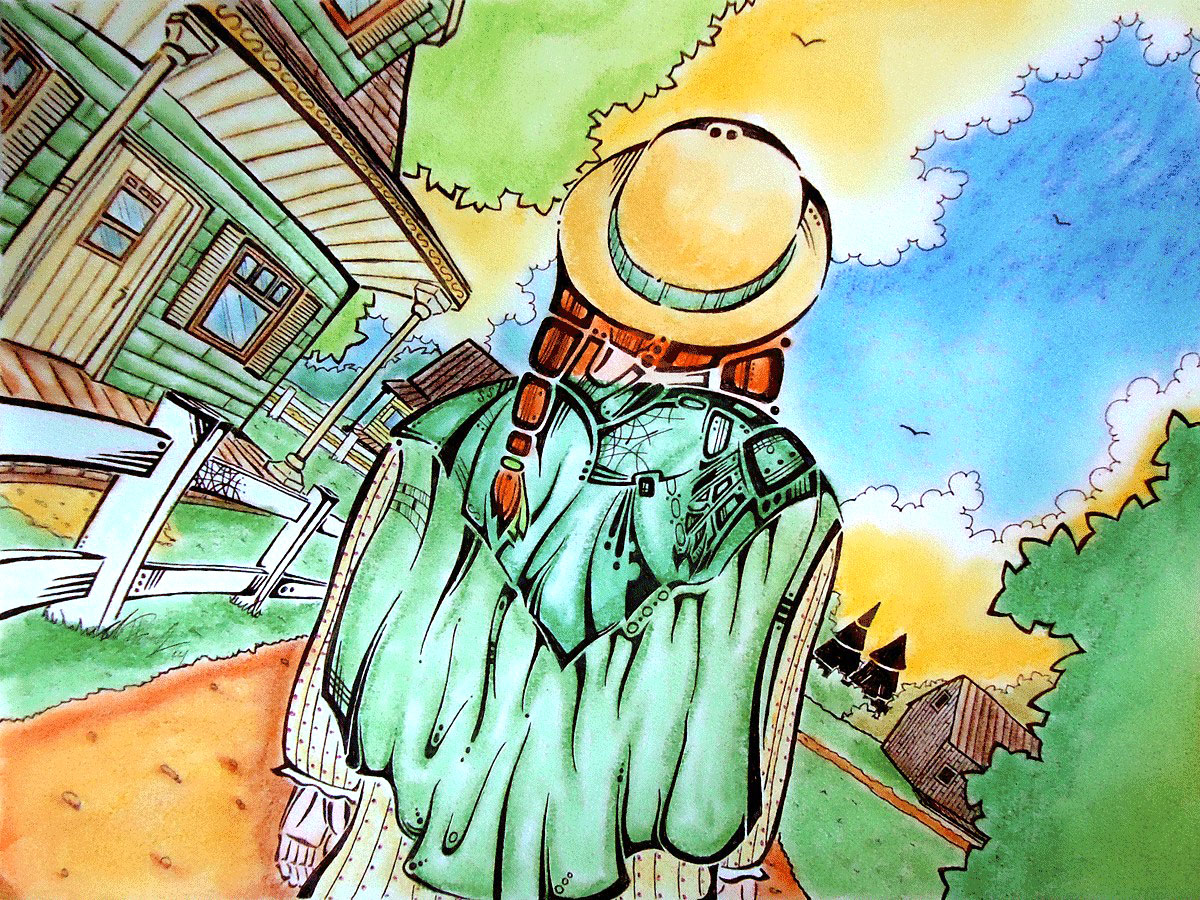
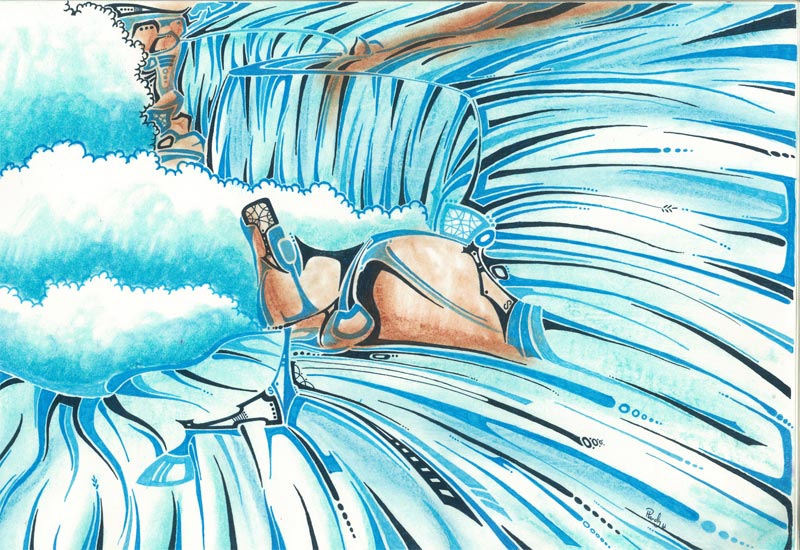
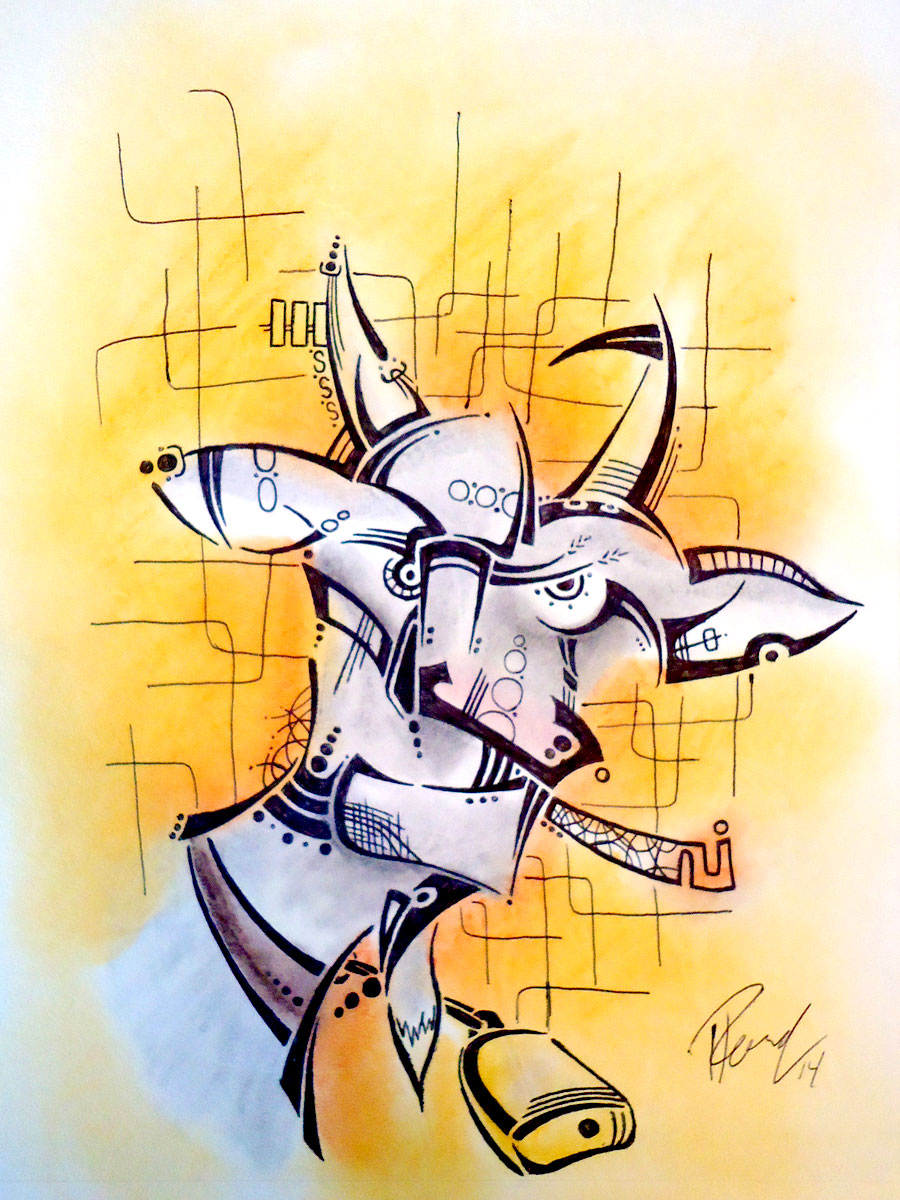
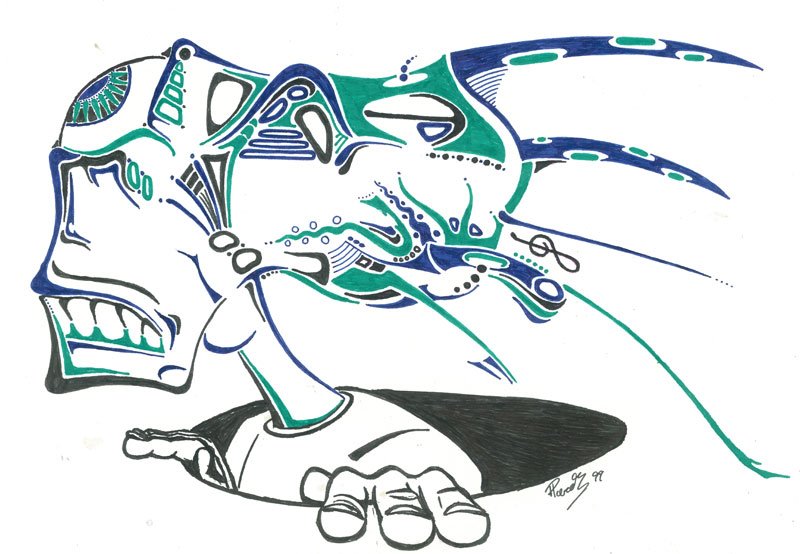
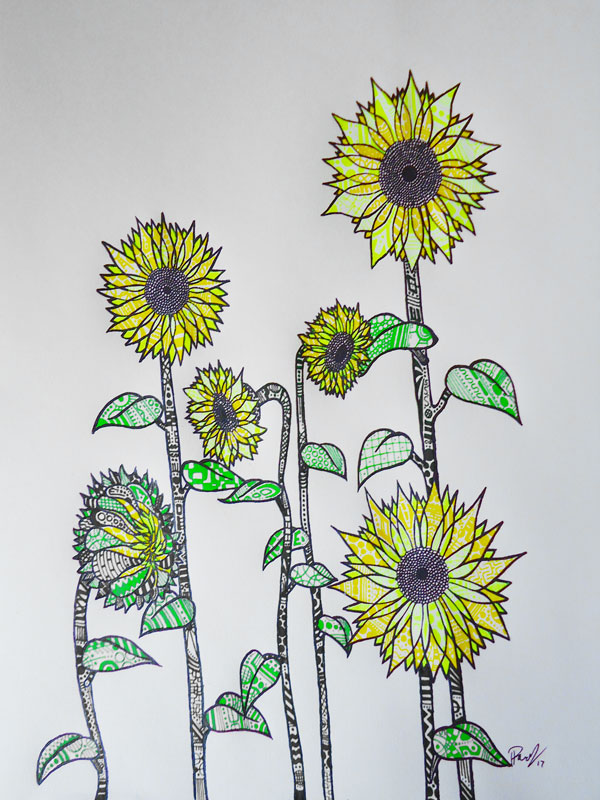
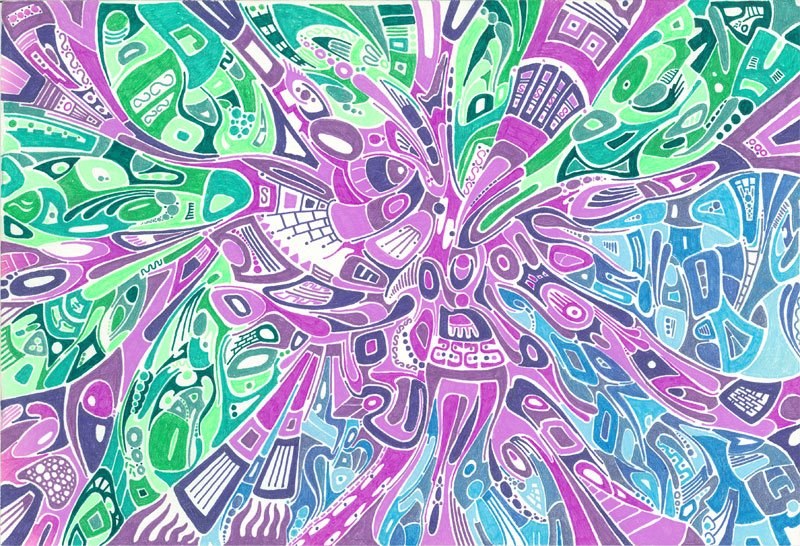
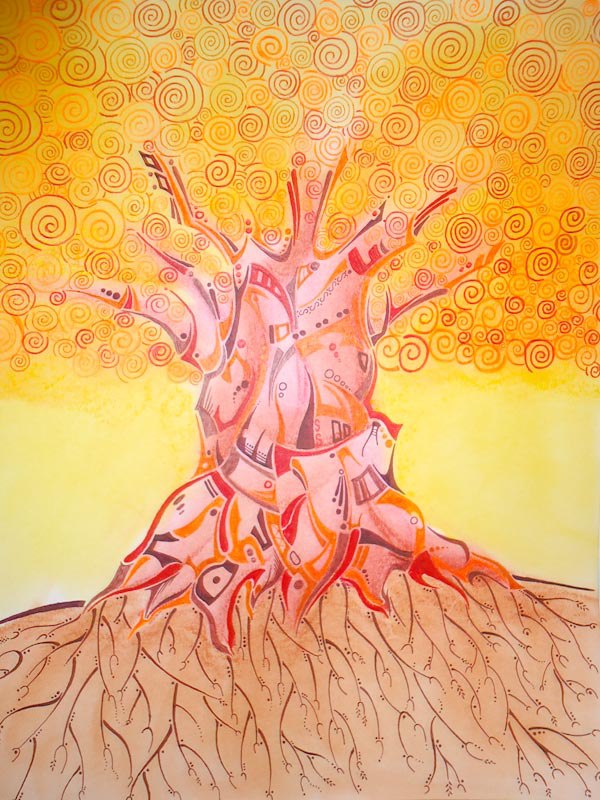
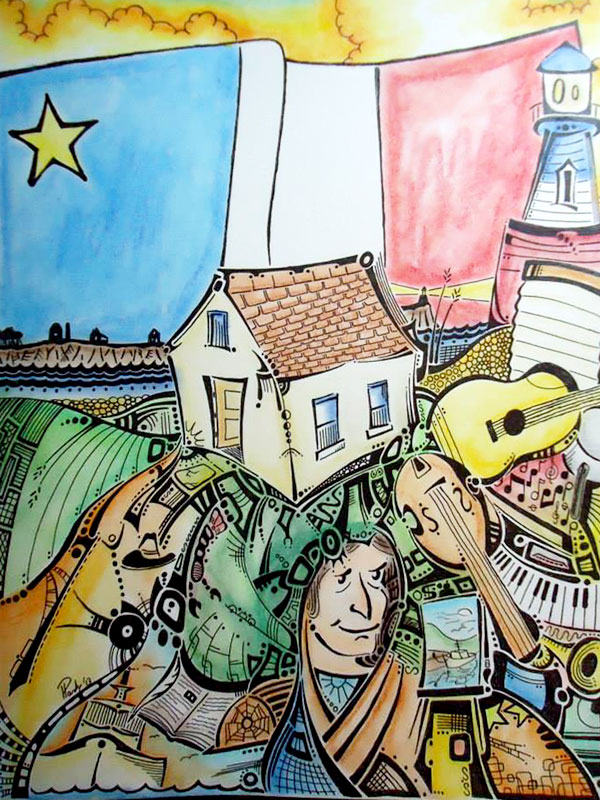
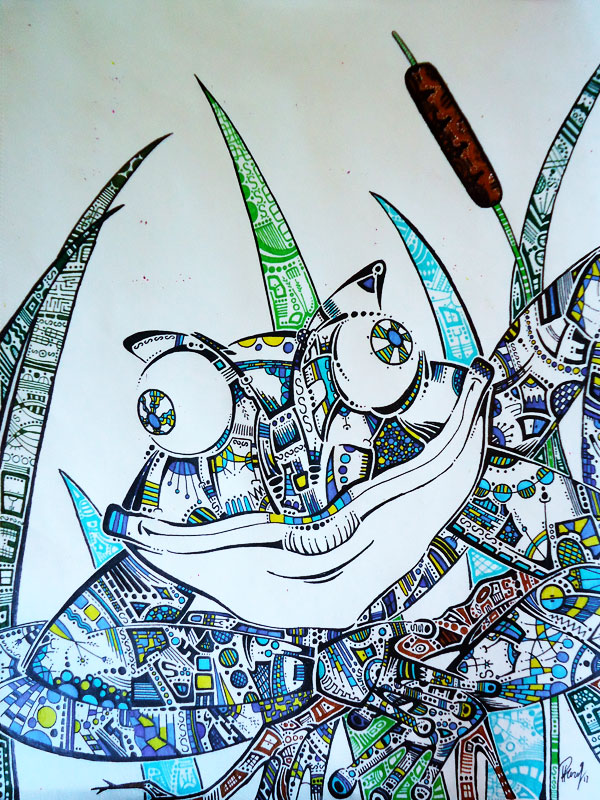
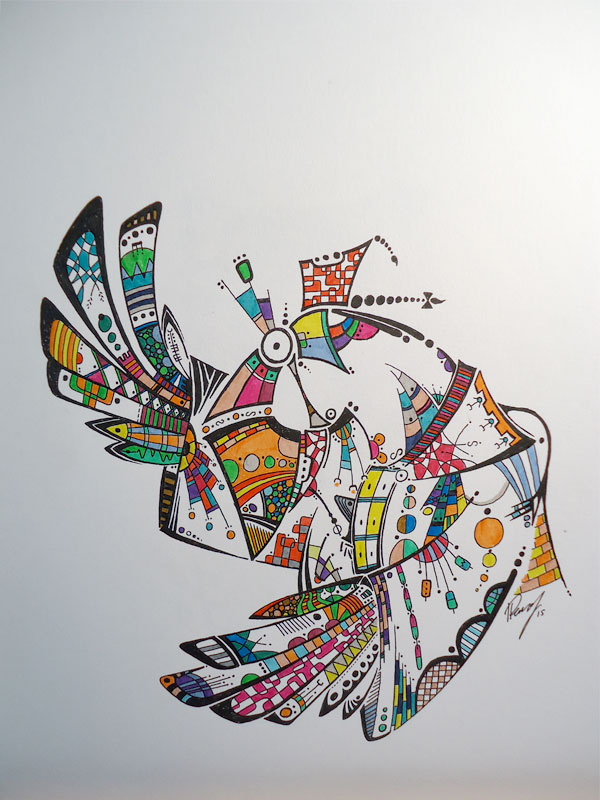
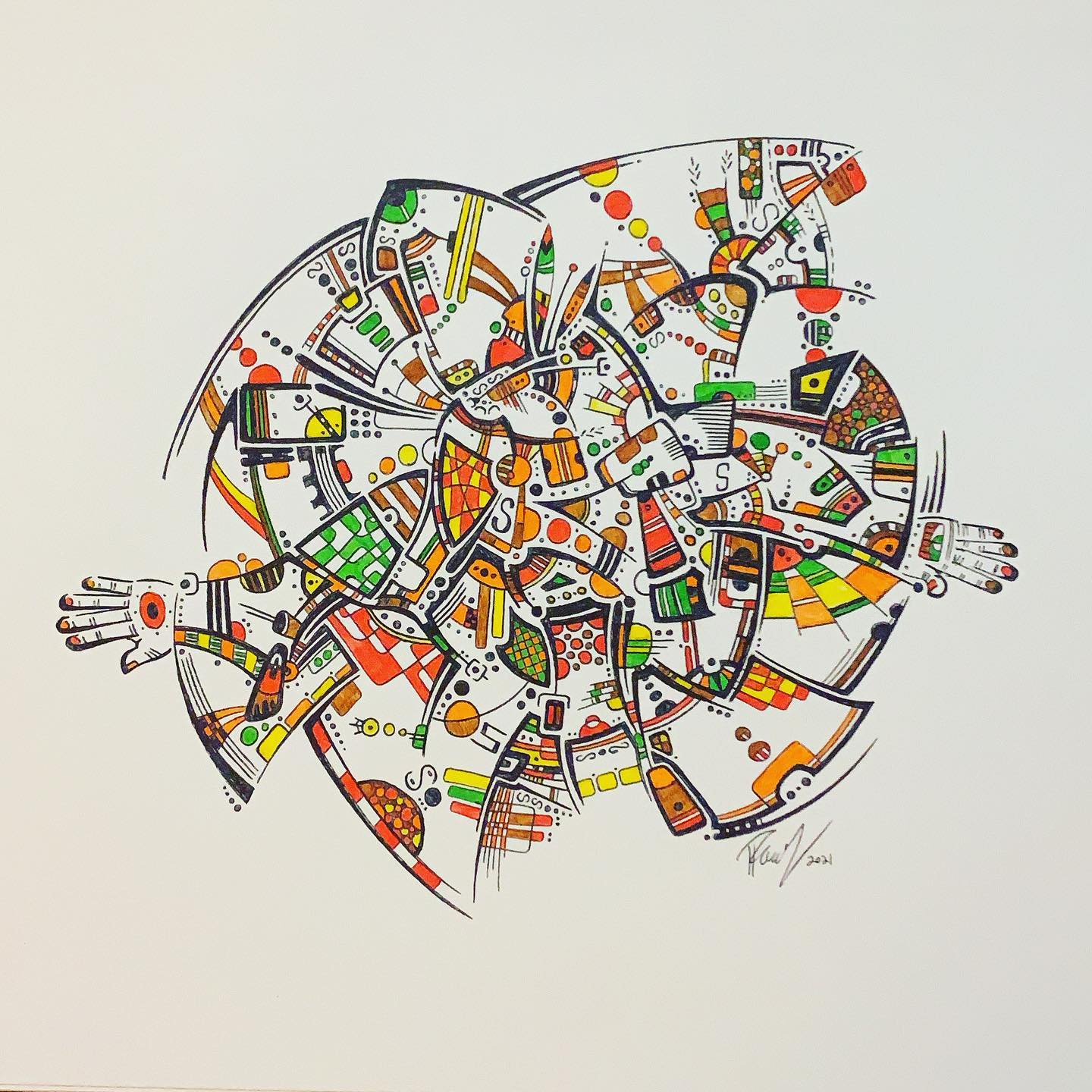
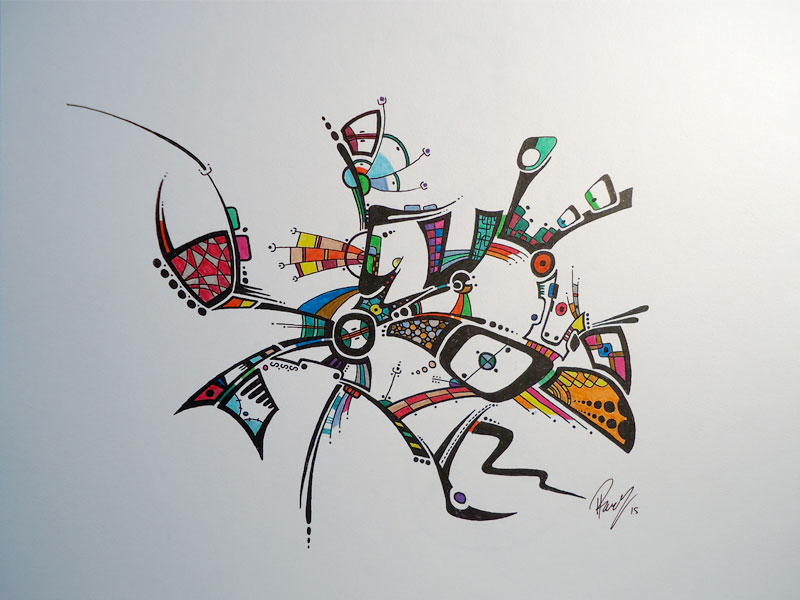
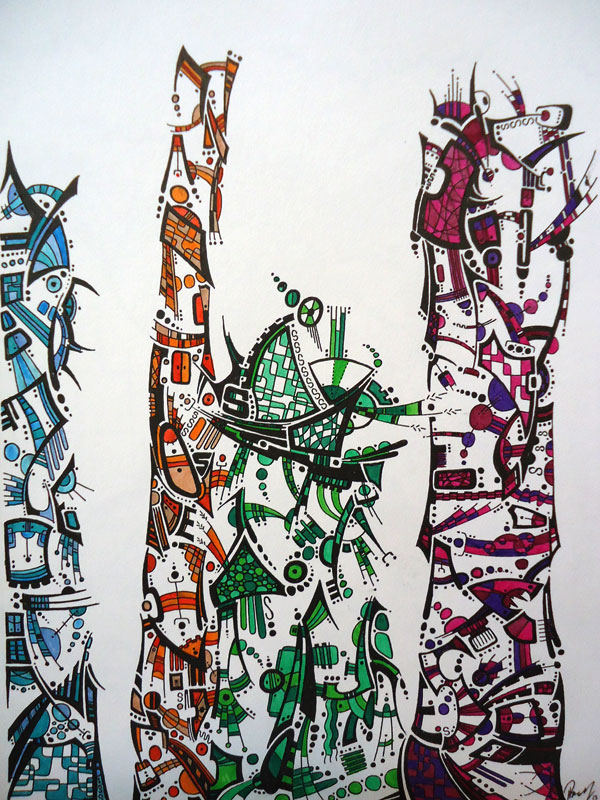
In Stalagmite & Miner, Patrick Hardy constructs a visual ecosystem that hovers between abstraction and narrative, between diagram and dreamscape. The work features three elongated, columnar forms—each one a dense, breathing constellation of signs, patterns, and architectural fragments. Though distinct in palette and personality, the forms share a common structural logic, as though they belong to a single species or civilization. In their verticality and intricacy, they read like contemporary totems: carriers of memory, culture, and coded knowledge.
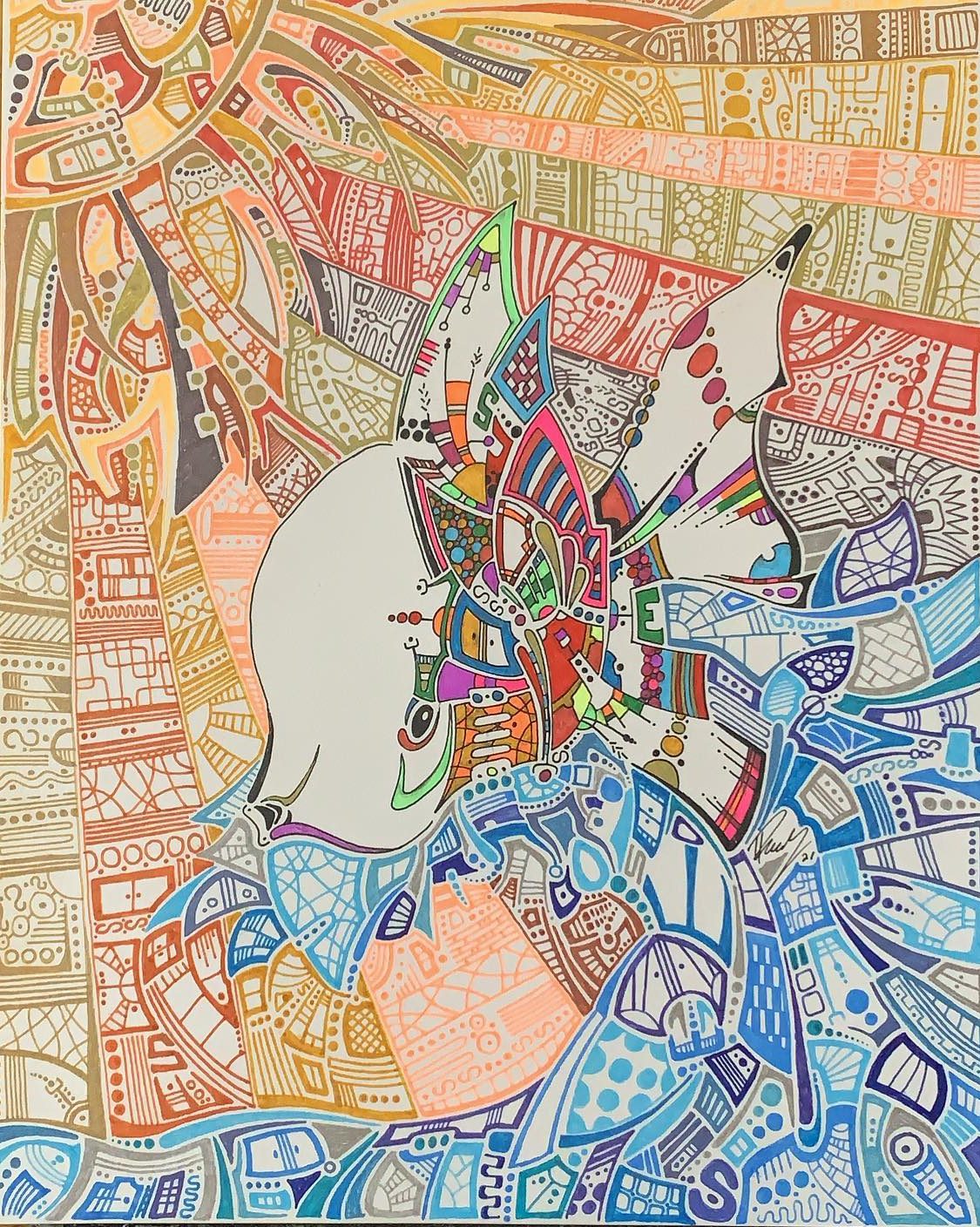
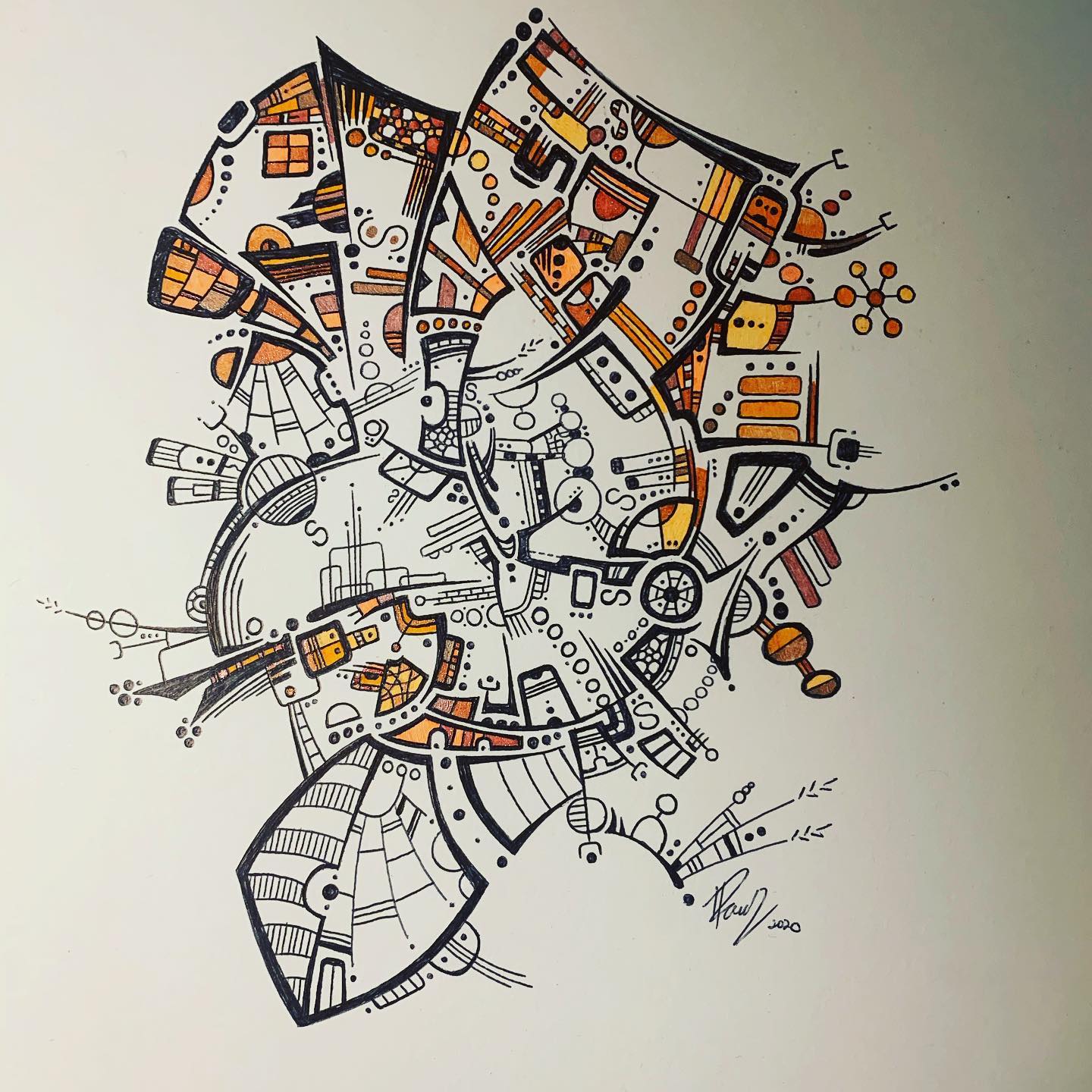
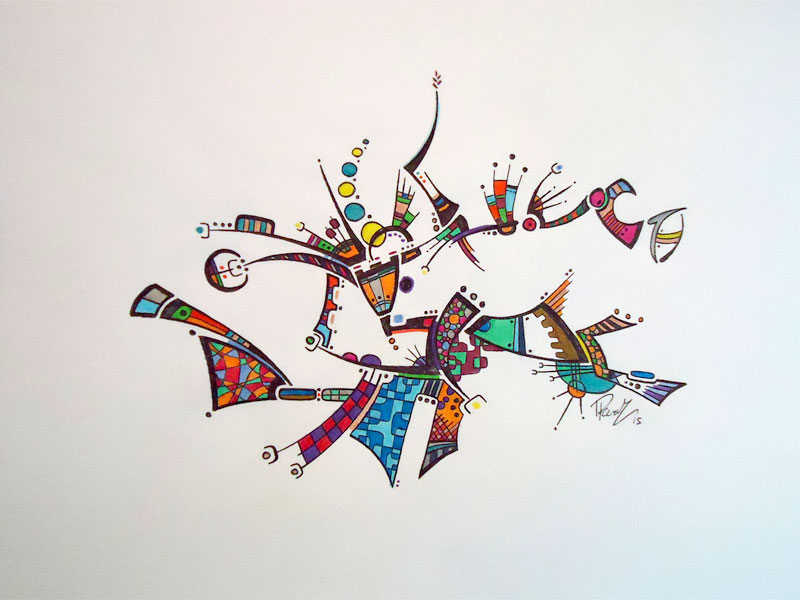
What immediately strikes the viewer is the sheer density of Hardy’s mark-making. The drawing unfolds not as a singular image but as an accumulation of micro-events. Dots, circuits, grids, and shard-like shapes swarm across the surface, suggesting the meticulous labor of a draftsman and the boundless imagination of a world-builder. Hardy’s visual vocabulary recalls cartographic diagrams, urban blueprints, and biological networks, yet it defies the functional purpose of any one system. Instead, the work positions itself at the boundary where systems begin to collapse into poetry.
Color plays a defining role in the emotional architecture of the piece. The cool blues, vibrant oranges and greens, and warm purples each articulate an inner energy—distinct yet harmonious. These chromatic zones give the impression that the forms possess internal climates or states of being. The drawing thus becomes not merely an abstract construction but a kind of psychological landscape, with each structure offering a different emotional temperature. This sense of interiority is reinforced by Hardy’s layering: beneath the visible outer patterns lie hints of deeper networks, as if the forms are built from multiple strata of history and function.
Hardy’s work participates in a lineage of artists who use abstraction as a means of encoding reality rather than escaping it. There are echoes of Paul Klee’s playful symbology, Wassily Kandinsky’s animated architectures, and even the improvisational density found in Art Brut. Yet the piece remains unmistakably contemporary. Its hybrid of organic growth and technological circuitry speaks to an age in which boundaries between biological, digital, and emotional worlds are increasingly porous. These forms seem to exist at that very threshold: part organism, part machine, part spiritual artifact.
Despite its complexity, the drawing never collapses into chaos. Each form is bound by a clear silhouette, a gesture that holds the internal activity in tension. This compositional discipline allows Hardy to explore exuberance without sacrificing legibility. The result is a work that rewards prolonged viewing; the longer one spends with it, the more it reveals. Small pockets of narrative emerge—motifs that repeat, evolve, or subtly distort—hinting at a language on the verge of being deciphered.
Ultimately, Untitled invites viewers to enter a dialogue with the unknown. It proposes that meaning need not be explicit to be deeply felt. By constructing a universe of symbols without a key, Hardy gives the viewer space to wander, interpret, and imagine. The work becomes a site of discovery—one that reflects the complexity, fragmentation, and interconnectedness of contemporary experience.
In this drawing, the artist is not merely depicting a world; he is inventing one.